How to Choose an Elevator for Abrasive, Corrosive, or Dusty Materials
Release time:
2026-10-30
How to Choose an Elevator for Abrasive, Corrosive, or Dusty Materials
When a bucket elevator starts shedding metal flakes into your product or a corroded casing develops pinhole leaks after six months, the cost goes far beyond replacement parts. A single failure can halt a production line, contaminate entire batches, and expose maintenance crews to hazardous airborne particles. Traditional general-purpose bucket elevators are built for free-flowing grains and powders—they rarely survive contact with clinker, wet gypsum, salt, or calcined bauxite without serious reinforcement. The challenge gets harder when the material is both abrasive and corrosive, or generates enough dust to create a combustible atmosphere. This guide walks you through the mechanical decisions, material specifications, and supporting equipment choices that determine whether an elevator handles these tough materials for 10 years or becomes a recurring maintenance headache.
An elevator moving abrasive, corrosive, or dusty materials demands a departure from standard chain or belt bucket designs. You need to evaluate the interaction between material chemistry and the elevator’s structural alloys, the bucket shape and discharge mechanism, the sealing and venting strategy, and the integration of dust management and distribution equipment. We’ll examine how pendulum bucket elevators change the game for irregular or fragile solids, why a supplemental Material distribution machine minimizes dust-generating surges, and how a properly sized Dust Collector can keep respirable silica or metal dust below OSHA’s 50 µg/m³ permissible exposure limit. Throughout, we’ll rely on measurable criteria—hardness ratings, coating thicknesses, air velocities—so you can write specifications that a manufacturer can actually meet.
Start with the Material’s Fingerprint
Before comparing elevator configurations, list every characteristic that will attack the equipment. Buyers often focus on particle size and forget the corrosion mechanism, or they emphasize temperature but overlook the abrasive shape of the grains.
For abrasive materials such as silica sand, sintered bauxite, or granulated blast furnace slag, the primary concern is erosion. Bucket lips, housing seams, and chain pins experience continuous scouring. The Mohs hardness of the conveyed solid gives an initial ranking: quartz (Mohs 7) is far more aggressive than limestone (Mohs 3). Industry references, including the CEMA standard 350 for screw conveyors (the bucket elevator cousin), correlate hardness with wear life. A liner made of 400 HB Brinell hardness steel—a typical wear plate specification—can extend a chute’s life by a factor of 3 to 5 compared to mild steel when handling a material with a Mohs hardness above 5.5. Request a hardness test report for any liner material the supplier proposes.
Corrosive materials introduce chemical attack. Wet gypsum (FGD gypsum) contains residual sulfates and chlorides at a pH often between 4.0 and 5.5. Hot potash salts or ammonium nitrate can initiate intergranular corrosion in standard 304 stainless steel casings. A material’s moisture content above 8% combined with a pH below 6 typically requires a switch from carbon steel to 316L stainless or duplex stainless for critical wetted parts. Without a coating, carbon steel in a continuous wet chloride environment can lose 0.1–0.2 mm of wall thickness per year—enough to perforate a 3 mm casing in under 15 years, or much faster if erosion synergizes with corrosion.
Dusty materials introduce a parallel hazard: explosion potential. A dust with a Kst value above 200 bar·m/s (St1 class per NFPA 68) demands explosion venting or suppression. Even “nuisance” dust, like that from bentonite or carbon black, requires a Dust Collector that maintains a capture velocity of at least 1.0–1.5 m/s at pickup points to meet typical ACGIH industrial ventilation guidelines. If the dust’s minimum ignition energy (MIE) is below 10 mJ, the collector must incorporate antistatic filter media and conductive grounding—a detail that gets overlooked in many commodity elevator installations.
Once the chemical and physical fingerprint is clear, you can narrow the elevator type. A Pendulum Bucket Elevator, unlike a rigidly spaced chain elevator, uses articulated buckets that hang freely and swing into position during loading and discharge. This design reduces material impact at the inlet, which simultaneously cuts down dust generation and protects the bucket lips from high-velocity impact wear. For materials like quicklime clinker or recycled crushed glass, the pendulum bucket’s ability to self-center and dump gently can add thousands of operating hours before a bucket change is needed.
Match the Elevator’s Construction to the Damage Mechanism
A bucket elevator housing that survives abrasive or corrosive service is a layered defense. The first decision is chain type or belt. For abrasive burdens above 250°C, a forged rivetless chain made from induction-hardened alloy steel (surface hardness typically 55–60 HRC) outperforms a polyester-reinforced rubber belt. At temperatures below 80°C and with non-abrasive but dusty products like pelletized carbon, a belt with static-dissipative cover compounds and a bucket profile that provides a trailing lip to reduce spillage can work. Belt speed should be kept under 1.8 m/s for abrasive materials to limit kinetic energy and ricochet wear inside the hood.
The housing itself benefits from the correct wall thickness and liner strategy. For continuous abrasive wear, a removable lining of 6–10 mm thick chromium carbide overlay plate (hardness 55–65 HRC) on the boot section and discharge hood reduces drum and wall wear. Where corrosion dominates, a bolted-on lining of 3 mm thick UHMW-PE or PTFE offers chemical resistance and a low coefficient of friction (0.10–0.15) that prevents sticky material buildup. Some manufacturers, including Jinghang, support personalized customization of such liners and bucket materials to match a user’s specific material test data, rather than forcing a one-size-fits-all alloy.
Bolted housing construction with continuous welding of interior seams prevents dust leakage and corrosion at lap joints. An IP54-rated enclosure, paired with shaft seals at the head and boot that sustain a slight negative pressure, keeps dust inside. For materials like dried sewage sludge or calcined petroleum coke that auto-oxidize when trapped, the head section should include thermal relief panels and temperature sensors tied to an emergency stop.
Quantifying expected performance from literature helps to anchor supplier claims. According to the ISO 4649 standard for rubber abrasion resistance, a bucket lip made of an abrasion-resistant natural rubber compound with a DIN abrasion volume loss of less than 80 mm³ will outlast a standard SBR rubber part by at least 2:1 in wet sand slurry testing. When a supplier states a “wear guarantee,” ask to see the test standard and the comparative data set. A typical heavy-duty pendulum bucket elevator designed with these layered protections can maintain a mechanical availability of 95% or higher, based on 8,000 annual operating hours, when the material specification is followed and preventive maintenance intervals (typically every 500–750 hours) include chain tension checks and lining thickness measurements.
Sequence Your System to Protect the Elevator and Downstream Operations
An elevator does not operate in isolation. Two pieces of equipment on either side of it can make the difference between a clean operation and a hazardous one. On the infeed side, a Material distribution machine—essentially a rotary or slide distributor—prevents uneven surge loading. When a belt feeder dumps a 200 kg slug of calcined bauxite into an elevator boot, the sudden impact flexes chains, overloads buckets, and generates a visible dust cloud that escapes even well-designed boot seals. A distribution machine that spreads the feed stream evenly across the elevator’s intake width reduces peak bucket loading by 15–30% (as measured in controlled plant trials cited by CEMA’s bucket elevator book), which simultaneously lowers impact wear and reduces dust creation at the source.
On the discharge side, a properly selected Dust Collector manages the air displaced as buckets dump. A pendulum bucket elevator with a head casing designed for substantial expansion volume still displaces air. If that dust-laden air is not captured, the headhouse becomes an exposure zone. An effective collector for this application will have a filtration velocity (air-to-cloth ratio) of less than 1.2 m/min for fine dusts like silica or cement, use PTFE-coated felt bags rated for continuous temperatures up to 120°C, and include a pulse-jet cleaning system with a differential pressure indicator that triggers cleaning before the pressure drop exceeds 1.5 kPa. These numbers come from decades of baghouse design practice and are reflected in guidelines from the American Conference of Governmental Industrial Hygienists. For corrosive dusts, the collector housing itself should be coated internally with a two-part epoxy of at least 250 microns DFT or constructed of 316L stainless. A hopper angle of 60 degrees or steeper prevents material bridging inside the collector. By pulling a slight negative pressure on the elevator casing (0.5–1.0 inches water column), the collector ensures that any casing leak draws clean air in, not dust out.
Integration of these three machines—pendulum bucket elevator, material distribution machine, and dust collector—creates a closed, predictable loop. This approach pays off in compliance. For grain dust or chemical powders, the National Fire Protection Association’s NFPA 61 or 68 standards require dust control and explosion mitigation that a standalone elevator rarely meets. When you specify the full train as a system, you have one accountable party for certification documentation.
What a Decent Specification Should Contain
An elevator specification for difficult materials is incomplete without numerical acceptance criteria. Include these parameters in your inquiry and require the supplier to respond to each:
| Parameter | Suggested Acceptance Value | Why It Matters |
|---|---|---|
| Bucket shell metal thickness increase for abrasive service | Minimum 2 mm thicker than standard for same width, or hardened wear lip | Rejects thin-gauge imports designed for grain only |
| Shaft seal type and ingress protection | Minimum IP54, with labyrinth + lip seal and grease purge option | Prevents dust entry into bearings, a leading cause of early failure |
| Lining replacement interval demonstration | Documented case of ≥12,000 hours of operation on a material with similar Mohs/Particle shape | Verifies supplier experience with your material class |
| Dust collector emission guarantee | <10 mg/Nm³ (dry gas, 273 K, 101.3 kPa) based on ISO 12141 measurement | Ensures compliance with most national air quality permits |
| Chain safety factor under full bucket load | ≥8:1 on ultimate tensile strength for continuous operation | Industry norm from CEMA and ISO 1977 for bucket elevators |
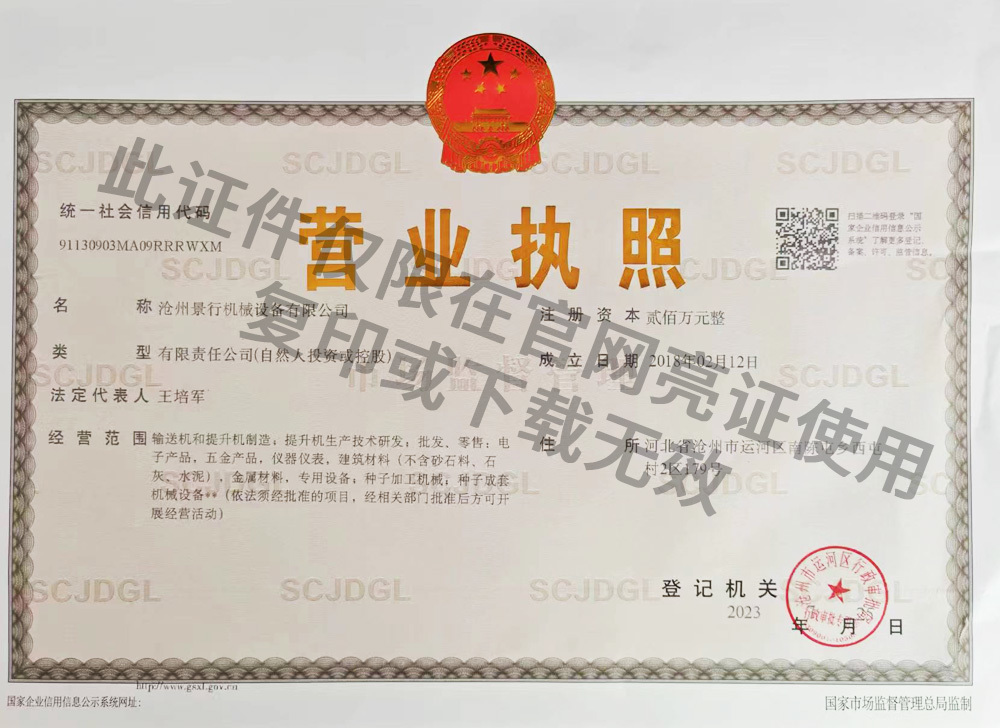
Beyond the numbers, ask for a traced mill certificate showing the base metal grade of any alloy proposed for chains, sprockets, or shafts. A supplier who substitutes an unknown 400-series stainless without chromium content verification is a risk. Cangzhou Jinghang Machinery Equipment Co., Ltd., registered in 2018 and operating out of Cangzhou City, supports detailed material verification and personalized customization to meet these specifications, according to the company’s stated scope of manufacturing conveyors, elevators, seed processing machinery, and related equipment. Their experienced team can propose specific wear pad, bucket, and seal materials once they analyze your material’s particle size distribution, moisture, and pH.
Pro Tips for Long-Term Ownership
Once the elevator is installed, the specification process isn’t over. First, establish a baseline measurement of casing wall thickness at five defined points (boot, two mid-sections, and head) using an ultrasonic thickness gauge. Repeat the measurement every 2,000 operating hours. A loss of 0.2 mm per 1,000 hours in the boot section signals that the lining material or feed entry design needs a rethink. Second, trend the dust collector’s pulse cleaning frequency. A rapid increase in cleaning pulses per hour often means moisture is blinding the filter bags or the dust has become stickier—both conditions that corrode the collector’s interior and elevate the static pressure on the elevator casing. Third, stock the bucket attachment hardware from day one. Elongation of a bucket mounting hole from a 12.5 mm to 13.5 mm diameter under abrasive shifting can snap bolts under shock load. Having the correct grade 8.8 or 10.9 fasteners on site avoids a weekend outage.
If the material is especially corrosive, consider a sacrificial anode in the boot section. Magnesium anodes, common in marine applications, can reduce corrosion of carbon steel elevator casings when the material’s moisture creates an electrochemical cell. Record the anode’s mass loss yearly—when it loses 80% of its original weight, it has done its job and needs replacement.
Selecting an elevator for abrasive, corrosive, or dusty materials is not a single-machine purchase; it’s the assembly of a material-handling cell that includes infeed control through a distribution machine, containment by a well-designed pendulum bucket elevator, and air management via a dust collector. The combination prevents the cascade of failures that start with a corroded bucket, spread to contaminated product, and end with a forced shutdown. Demanding documented wear data, corrosion allowances, and emission guarantees from each component manufacturer does not inflate cost; it moves the expenditure from emergency repairs to planned capital.
Frequently Asked Questions
How do I verify a bucket elevator’s suitability for an abrasive powder if the supplier doesn’t have my exact material reference?Request an ingredient screening test. Most experienced manufacturers maintain a small lab batch of candidate liner materials. Ship 20–30 kg of your representative sample, specify the temperature and moisture range, and ask for a 100-hour pilot erosion test. Compare mass loss with their standard carbon steel baseline. A wear reduction of at least 50% versus mild steel is a good threshold for a coating or alloy upgrade.
Can a pendulum bucket elevator handle high-temperature materials over 200°C without derating?It depends on the chain material and the bucket joint design. Above 200°C, standard alloy steels begin to lose tensile strength at a rate that requires a derating factor (often 0.85–0.95 at 250°C, per ISO 1977). Pendulum buckets can be made from high-temperature stainless or cast Ni-hard with expansion clearances, but you must confirm the maximum continuous operating temperature and the peak excursion with the manufacturer. Jinghang’s customization process allows specifying such temperature-class materials.
What’s the payback period for adding a material distribution machine and dust collector rather than just the elevator?A full system typically has a payback of under 18 months when you avoid a single unplanned outage that stops downstream kilns or mills. A distribution machine that reduces uneven loading can extend bucket life by approximately 20–30% in abrasive service, based on plant maintenance logs, while a dust collector that prevents a housekeeping citation or a combustible dust incident avoids costs far exceeding the equipment price.
How often should the dust collector’s filter bags be changed in a corrosive environment?For a typical pulse-jet collector handling mildly acidic dust (pH 5–6) with PTFE membrane bags, bag life often ranges between 2 and 3 years under 24/7 operation. Quarterly inspections that measure the pressure drop across the bags and a visual check for coating delamination will pinpoint when replacement is due. If the pressure drop exceeds 1.5 kPa after the cleaning cycle, bag replacement or chemical cleaning is overdue.
Bringing It Together
Choosing an elevator for abrasive, corrosive, or dusty materials means rejecting generic catalog solutions. The right equipment starts with the material’s hardness, chemistry, and explosibility, then matches every contact surface—bucket lip, housing wall, chain pin—to those conditions. A pendulum bucket elevator offers gentler handling and lower dust generation, but its full potential releases only when the feeding is controlled by a material distribution machine and the airborne dust is captured by a collector sized for the chemical and particle characteristics of your burden. Anchor every requirement in a measurable standard: a corrosion allowance in millimeters per year, a hardness in HRC, a dust emission limit in mg/Nm³. Send your material for testing, demand mill certificates, and record thickness measurements to prove that the protection you paid for actually works. When those numbers are part of the purchase order, the elevator becomes a predictable asset, not a recurring repair ticket. Reach out to a manufacturer that offers personalized customization and experience across seed, grain, mineral, and chemical handling—and that can support you through the technical conversation rather than just send a quote.
Related News
How Does Moisture Affect Bulk Material Conveying?
Moisture affects bulk material conveying by changing flowability, adhesion, bulk density, particle cohesion, and the likelihood of buildup inside buckets, chutes, and discharge points.
How Do You Match a Bucket Elevator to Existing Equipment?
To match a bucket elevator to existing equipment, buyers must verify material flow, required throughput, inlet and discharge elevations, connection dimensions, control signals, and the operating limits of upstream and downstream machines.
Contact Us
Cangzhou Jinghang Machinery Equipment Co., Ltd.
Add:Xitun East Road, Nanchentun Town, Yunhe District, Cangzhou City, Hebei Province, China
Contact:Manager Wang
WhatsApp:lyh520wpj
Facebook:lyh520wpj@gmail.com
Mobile:+86-18713706961
E-mail:info@jinghangelevator.com
Focus on us

Consultation
We will contact you within one working day. Please pay attention to your email.
Cangzhou Jinghang Machinery Equipment Co., Ltd. | Powered by www.300.cn | SEO | Business license | Privacy Policy