Why Moisture, Stickiness, and Flowability Change Bucket Elevator Selection
Release time:
2026-10-30
Why Moisture, Stickiness, and Flowability Change Bucket Elevator Selection
A bucket elevator is one of the most reliable machines for vertical bulk handling — until the material it carries starts to misbehave. Buyers comparing pendulum bucket elevators, chain elevators, or belt elevators often focus on capacity, lift height, and bucket size, while overlooking the three silent disruptors that determine whether the system thrives or becomes a maintenance nightmare: moisture, stickiness, and flowability. Ignore them, and you risk bridging in the infeed chute, compacted discharge, corrosion, or a chain that keeps jumping off the sprockets. This article explains why those three properties must sit at the center of your selection process, and how a thoughtfully configured Pendulum Bucket Elevator — along with complementary handling equipment — turns challenging materials into a steady, low-dust vertical stream.
Before diving into the details, it helps to understand a fundamental reality: no two powder or granule flows are identical. Even products sold under the same trade name can behave differently depending on upstream drying, particle size distribution, or storage conditions. Jinghang Machinery, with its experience in customized conveying systems, routinely adjusts bucket geometry, chain speed, hopper transitions, and dust control to match a facility’s actual material state, not an idealized datasheet. The following sections explore how moisture, stickiness, and flowability reshape those decisions.
---
How Material Character Tests Expose Elevator Risk Early
Procurement often begins with a capacity requirement — say, 30 m³/h of wheat flour or 50 t/h of fly ash — but the chosen elevator’s real throughput depends heavily on the material’s ability to fill and discharge buckets without resistance. Standard flow property tests give you a head start. Shear cell measurements (following ASTM D7891 or the Schulze ring shear method) quantify unconfined yield strength and internal friction, which predict arching and ratholing in hoppers. For bucket elevators, however, two simpler field indicators frequently matter more: angle of repose and compressibility.
A free-flowing granular material such as dried maize typically shows an angle of repose below 30 degrees and a compressibility index under 15%. That means the material self-levels and dumps cleanly from a pendulum bucket almost at the theoretical capacity. Moist, cohesive powders — think wet bentonite or filter cake — can push the angle of repose beyond 50 degrees and the compressibility above 30%. What does that mean in practice? The discharge hood of a standard elevator will start to retain product, gradually building a crust that reduces net throughput by 10–15% within a single shift.
| Property Test | Free-Flowing Material (Reference) | Moist/Sticky Material Indicator |
|---|---|---|
| Angle of Repose | < 30° | Often > 45° |
| Compressibility (Carr Index) | < 15 | > 25 |
| Particle Size (d50) | Typically > 200 µm | Can be < 50 µm for cohesive fines |
| Moisture Content (w.b.) | 2–5% for many grains | 8–20% for hygroscopic or wet-processed materials |
| Flow Function (ffc) | > 10 (easy flowing) | < 4 (cohesive) |
A Material distribution machine often sits upstream of the elevator, feeding it from multiple silos or process lines. If that distributor is not designed to handle the same sticky mass flow, a bottleneck forms long before the buckets get a chance to prove themselves. That’s why Jinghang integrates the hopper and distribution geometry with the elevator’s inlet characteristics when a customer asks for a complete system.
---
Moisture — The Number One Thief of Elevator Capacity
Moisture sneaks into a vertical conveying circuit through ambient humidity, incomplete drying, or steam conditioning. Even a 1% increase in moisture, for certain fine organic powders, can double the cohesive strength measured in a shear cell. When that happens, the bucket fill efficiency — the ratio of the actual payload to the bucket’s geometric volume — can drop from 75% to under 55%. You still run the motor at the same speed, but you move less product per hour, and the power consumed per ton jumps.
Engineers managing cement or lime handling long ago learned that hygroscopic materials demand enclosed, gasketed elevator casings and, often, a moisture control strategy on the inlet side. The logic applies equally to grain processing byproducts, chemical salts, and battery materials. If water activity (aw) in the powder exceeds 0.6, the risk of microbial growth and caking rises, but from a purely mechanical standpoint, the immediate threat is material buildup on the back of the bucket, inside the boot, and along the return legs. A pendulum bucket design, which allows the bucket to hang freely and self-align, helps reduce the severity of this buildup compared to rigidly mounted buckets on a chain, but it does not eliminate the need for proper boot cleanout doors and possibly a low-friction bucket surface. Jinghang frequently recommends mild steel or stainless steel bucket options depending on the material’s corrosion potential after moisture exposure, and pairs the pendulum elevator with a Dust Collector when the vapor or fines pose an additional fugitive dust risk.
---
Sticky Situations — When the Material Refuses to Let Go
Stickiness is not just high moisture; it’s a surface chemistry problem. Molasses-coated pellets, hygroscopic urea, and reactive metal powders can all exhibit adhesion forces that overwhelm the centrifugal discharge mechanism of a bucket elevator. At the top of the curve, the bucket rotates around the sprocket (or pulley, in belt elevators) and relies on gravity and centrifugal force to eject the load. When the adhesive force between the particles and the bucket wall exceeds the ejection force, a fraction of the payload sticks, rides back down the return leg, and creates a cross-contamination loop that gets worse with every revolution.
Centrifugal discharge elevators work best for free-flowing, non-adhesive materials. When stickiness is present, a positive-discharge or gravity-discharge configuration often makes more sense. A pendulum bucket elevator can be engineered with a slow, continuous chain path that inverts the bucket fully and relies on gravity rather than centrifugal force to empty it. That deep inversion, combined with a bucket shape that has a smooth interior and generous radii, gives sticky materials fewer corners to cling to. Operators report that stickiness-related carryback can be reduced by 40–60% simply by switching from a standard centrifugal discharge head to a pendulum-style head with gravity discharge, although exact results depend on the specific material and bucket material. For extreme cases, food-grade UHMWPE liners or polished 304 stainless steel buckets further lower the surface energy — a solution often discussed during the customization stage.
---
Flowability — The Hidden Performance Driver
Flowability is not a single number; it’s a composite behavior shaped by particle shape, size distribution, bulk density, aeration, and electrostatics. A material that pours effortlessly from a super-sack may still rat-hole or flood inside an elevator boot, starving the buckets or overwhelming them in an erratic surge. Inconsistent flow to the infeed means the buckets encounter alternating dense slugs and air-filled gaps, which sets up chain jerk and potentially a catastrophic fatigue crack over time.
Screw feeders and vibratory trays upstream can mitigate pulsating flow, but the elevator itself needs to be tolerant of a degree of variability. A pendulum bucket elevator, by design, allows each bucket to self-center as it scoops through the boot material, so short-term fluctuations in the infeed bed height impact it less than they do a rigid-chain continuous bucket elevator. The buckets adapt to the heap, rather than the heap needing to be perfectly conditioned for the elevator. This tolerance makes the pendulum concept appealing for materials with a cohesion-driven flow function (ffc) between 2 and 4, which are notoriously challenging to meter evenly.
Once the material reaches the top, flowability again decides the outcome. A powder that aerates easily can fluidize during discharge, blowing dust out of the hood vents and sometimes plugging the downstream Material distribution machine. A powder that deaerates slowly may pack inside the distributor chutes, causing a blockage that forces shutdown. That’s why the elevator and the distribution system cannot be sized in isolation; Jinghang views them as one interconnected flow path, which is reflected in how the company proposes a pendulum elevator together with a custom dust collector to manage air displacement at the transition points.
---
Quantifying the Cost of Getting It Wrong
When the wrong elevator is selected for a moist, sticky, or poorly flowing material, the maintenance log quickly fills with predictable entries:
- Chain elongation or belt slippage caused by overload from bucketed material sticking
- Boot bearing failures due to material ingress past ineffective shaft seals
- Bucket distortion and bolt elongation from cyclic dumping of cohesive lumps
- Up to 3–5 unplanned downtime events per month, each costing several thousand dollars in lost production and labor
In a survey conducted by a bulk solids handling consultancy (published in Powder and Bulk Engineering), plants handling cohesive powders reported that bucket elevator maintenance represented 18% of total conveyor maintenance costs, compared to 7% for plants handling easy-flowing aggregates. That gap reflects the compounding effect of moisture and stickiness on every moving interface inside the elevator.
Design modifications that directly respond to these risks often pay for themselves within the first year of operation. A stainless-steel boot with a sloped floor and a cleanout door; a chain tensioner with hydraulic take-up to compensate for thermal expansion in sticky environments; bucket lips with a serrated profile to cut through compacted feed — each of these choices is driven by the material’s personality, not a generic specification sheet.
---
How the Pendulum Bucket Elevator Adapts
The open framework of a pendulum bucket elevator gives the designer more degrees of freedom than a standard enclosed casing with fixed bucket attachments. Jinghang’s pendulum elevators, which follow a modular steel construction, can be configured with:
- C-type, T-type, and Z-type trajectories, chosen according to the inlet and discharge heights and the building footprint
- Chain types (hollow pin, forged link, or roller chain) selected to match tensile load, chemical exposure, and the tendency of sticky material to pack into the chain joint
- Bucket materials ranging from carbon steel to food-grade stainless steel, with optional reinforcement for abrasive feeds
- Variable speed drives that allow operators to dial in the exact chain velocity — as low as 0.8 m/s for heavy, cohesive bulks, or up to 2.5 m/s for dry, free-flowing granules
Moisture-prone applications often call for a boot section designed with a condensate drain and an air-purge gland to keep water away from the lower bearings. If the material is not just moist but also dust-generating during discharge, the top head is flanged to accept a Dust Collector that returns captured fines to the product stream, maintaining mass balance and workplace cleanliness.
A collaborative approach to selection starts with a material questionnaire and, ideally, a physical sample. Jinghang’s team evaluates bulk density, angle of repose, moisture content, and particle size, then recommends a bucket volume, spacing, chain speed, and discharge geometry that aligns with the measured flow behavior. The same sample often runs through a test hopper with a Material distribution machine to verify that the entire vertical-and-distribution system works without bridging or segregation.
---
Frequently Asked Questions
Can a single bucket elevator handle materials with varying moisture content from batch to batch?
Yes, but it requires a forgiving bucket discharge design and a variable-speed drive. A pendulum bucket elevator with gravity discharge accommodates moderate shifts in moisture better than a centrifugal elevator because the bucket unloads by pivoting rather than by relying entirely on centrifugal force. Operators generally observe a 5–8% throughput variation between dry and damp product; where that number exceeds acceptable limits, a closed-loop moisture sensor coupled to the drive speed may be needed.
How does stickiness affect chain life in a bucket elevator?
Sticky materials pack into the chain joints, accelerating pin-and-bushing wear and increasing rolling resistance. In severe cases, hardened material collects around the sprocket roots, causing chain hop and dynamic shock loads. Using a hollow-pin chain with hardened bushings and a dry-film lubricant can extend replacement intervals, but the first line of defense is a bucket and head geometry that empties completely on every cycle.
What discharge options work best for materials with an angle of repose above 45 degrees?
Gravity discharge, where the bucket is fully inverted in the head section, is typically the starting point. The bucket should have an internal surface with a draft angle of 10 degrees or more relative to the vertical, and the discharge chute should be steeply inclined — at least 65 degrees from horizontal, lined if necessary — to prevent a heap from stalling in the downcomer. A pendulum elevator facilitates this geometry because the bucket’s pivot point allows complete inversion without complex cam tracks.
Does adding a dust collector really help with flowability?
Indirectly, yes. Many sticky-powder problems worsen when fine particles become airborne and then re-settling as a static-clinging layer on the casing walls. A pulse-jet dust collector mounted on the elevator head captures fines before they build up on window ledges, inside the return leg, or on the bucket exterior. That reduces the cycling mass of adhesive dust and keeps flow paths cleaner over a production campaign.
---
Rethinking Selection from the Ground Up
Choosing a bucket elevator without first characterizing the material’s moisture, stickiness, and flowability is like designing a bridge without a geotechnical survey. It might stand for a while, but a single batch of wet, cohesive feed can turn a 24/7 operation into a weekend-of-downtime event. The real work of a purchasing engineer or a plant manager isn’t just comparing datasheet capacities; it’s interrogating how the material will actually behave at the infeed, inside the bucket, and through the discharge chute.
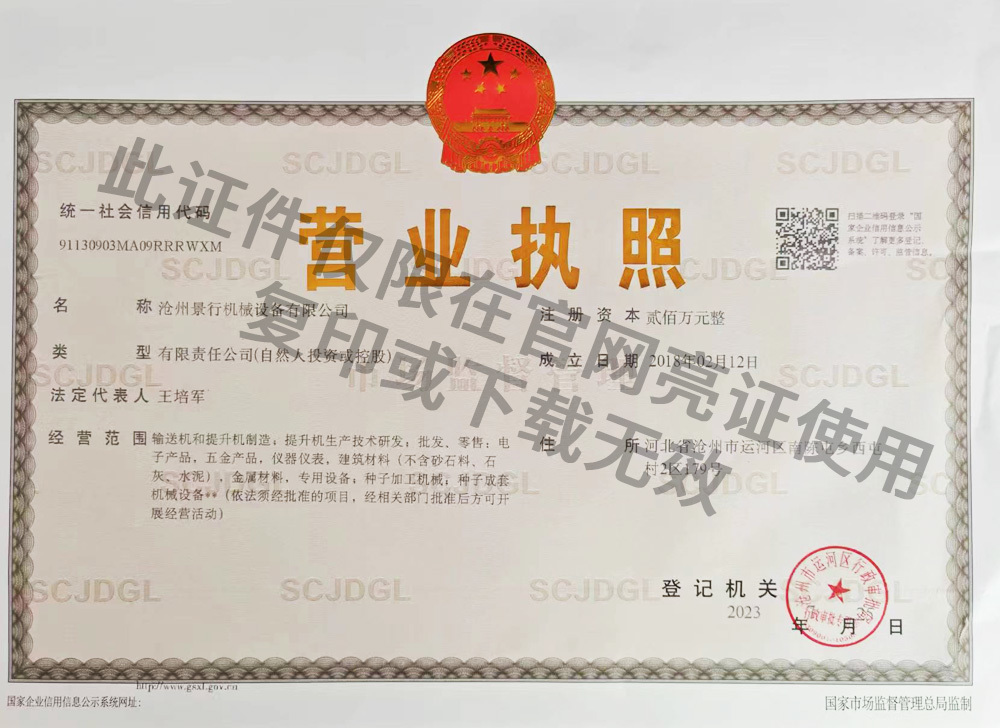
Jinghang Machinery, established in 2018 in Cangzhou, Hebei Province, has built its pendulum bucket elevator line around that principle. Rather than forcing a standard machine onto a difficult material, the engineering team adjusts the chain path, bucket shape, boot configuration, and dust control strategy, often proposing a complete package that includes the pendulum elevator, a material distribution machine, and a pulse-jet dust collector. Starting a conversation with a material sample and a candid discussion of moisture and flow challenges will always produce a more durable, more efficient vertical conveying system than any off-the-shelf catalog number can promise.
Related News
How Does Moisture Affect Bulk Material Conveying?
Moisture affects bulk material conveying by changing flowability, adhesion, bulk density, particle cohesion, and the likelihood of buildup inside buckets, chutes, and discharge points.
How Do You Match a Bucket Elevator to Existing Equipment?
To match a bucket elevator to existing equipment, buyers must verify material flow, required throughput, inlet and discharge elevations, connection dimensions, control signals, and the operating limits of upstream and downstream machines.
Contact Us
Cangzhou Jinghang Machinery Equipment Co., Ltd.
Add:Xitun East Road, Nanchentun Town, Yunhe District, Cangzhou City, Hebei Province, China
Contact:Manager Wang
WhatsApp:lyh520wpj
Facebook:lyh520wpj@gmail.com
Mobile:+86-18713706961
E-mail:info@jinghangelevator.com
Focus on us

Consultation
We will contact you within one working day. Please pay attention to your email.
Cangzhou Jinghang Machinery Equipment Co., Ltd. | Powered by www.300.cn | SEO | Business license | Privacy Policy