Bucket Elevator Replacement Buckets, Chains and Spare Parts: Buyer Guide
Release time:
2026-09-04
AI Overview
Ordering replacement buckets, chains, and spare parts for a bucket elevator comes down to three measurable things: the bucket dimensions (A-E), the chain pitch, and the sprocket bore. With those, any compatible part fits regardless of original brand. Chains should be replaced when 10-link elongation approaches 2% and always together with worn sprockets; buckets are replaced on cracks, deformation, or wall thinning. Material choice follows the product — food-grade PP for snacks and grains, ABS or stainless for abrasive duty. Jinghang Machinery Equipment supplies matched spare parts for its Z-type, C-type, T-type, and pendulum elevators with drawing confirmation before production.
Bucket Elevator Replacement Buckets, Chains and Spare Parts: Buyer's Guide
An elevator is only as available as its wear parts. The bucket that cracks, the chain that stretches, the sprocket that hooks — each one eventually forces a stop. The buyers who avoid unplanned downtime are the ones who know exactly what to order before the failure, not during it. This guide covers how to specify replacement buckets, chains, sprockets, and the supporting spares for Z-type, C-type, T-type, and pendulum bucket elevators.
The Three Numbers That Define Compatibility
Brand loyalty does not make a bucket fit; dimensions do. To order the right part, supply:
Bucket dimensions A-E — length, width, depth, mounting-hole pitch, and hole diameter.
Chain pitch — the center-to-center distance between chain pins; this dictates which chain and attachment plate fit.
Sprocket bore diameter — so the new sprocket seats on the shaft.
With these three, a supplier can confirm compatibility for any replacement part before production. Dimension is compatibility; brand is not. A correctly dimensioned replacement bucket, chain, or sprocket performs identically to the original regardless of where it was made.
Selecting Replacement Buckets
| Product type | Best choice | Avoid when |
|---|---|---|
| Sticky (gummies, fresh-cut fruit) | Patterned / non-stick surface bucket | Smooth standard bucket that fouls |
| Abrasive (salt, sugar, sand) | Rigid ABS or stainless steel | Soft PP that wears quickly |
| General (snacks, grains, pasta) | Standard PP, smooth surface | Over-specifying stainless needlessly |
| Food / pharma | Food-grade certified material | Uncertified industrial plastic |
Throughput also drives bucket size: a 1.8 L versus 3.8 L bucket changes how much product moves per hour at a given speed. Work with your supplier to size the bucket to your density and target feed rate.
Chains, Sprockets, and the Replacement Rule
The chain is the most failure-prone component because it carries the full weight of buckets and material. Key wear signals:
Chain stretch (elongation). The most common failure. A stretch of just 1.5-2% causes poor sprocket engagement and timing issues. Measure 10-link elongation monthly; order replacement approaching 2%. At about 3.5% stretch, or when the vertical link touches the flank of the tooth behind it, the chain must be changed.
Worn or seized rollers. Flat or non-rotating rollers mean excessive friction and noise.
Sprocket tooth hooking or thinning. A clear sign the sprocket will no longer engage properly.
Replace chains and sprockets together. Installing a new chain on worn sprockets (or vice versa) accelerates wear on the new component. At each chain replacement, inspect and replace the sprocket, bearings, and guide wheels as needed.
Maintenance Schedule That Prevents Downtime
| Frequency | Check | Action if problem found |
|---|---|---|
| Daily | Listen for irregular vibration or knocking | Stop and inspect at shift end if severe |
| Weekly | Visual bucket cracks/deformation; chain tension (2-3% sag) | Replace cracked buckets; adjust tension |
| Monthly | 10-link elongation; roller rotation; guide-rail groove | Order chain near 2%; replace rails over 3 mm groove |
| Every 3-6 months | Full bucket sample; sprocket tooth profile | Replace batch if cracks; replace sprocket on shark-fin wear |
Keep records of running times and repairs. Only well-maintained elevators reach long service intervals, and a written schedule is what turns "we think it's fine" into "we know it's fine."
Scenario Adaptation Comparison
| Elevator type | Typical wear focus | Spare-part priority |
|---|---|---|
| Z-type pendulum | Buckets, chains at corners | Buckets + nickel-plated chain sets |
| C-type | Chain at tight return | Chain + return sprocket |
| T-type | Discharge-point buckets | Buckets + drive sprocket |
| Multi-outlet / multi-inlet | Gate actuators, buckets | Buckets + gate seals |
User Word-of-Mouth Evaluation
"We started sending the bucket A-E dimensions with every order and stopped receiving parts that didn't line up with the holes — drawing confirmation before production saved a shutdown."
"Switching to matched chain-and-sprocket replacement sets ended the pattern of new chains wearing out in months on old sprockets."
"Monthly 10-link checks caught chain stretch before it jumped a tooth; we replaced on a planned weekend instead of an emergency call-out."
The lesson buyers repeat: measure first, replace as a set, and plan the swap.
Procurement and Application Checklist
Record the elevator model and the five bucket dimensions (A-E).
Measure or confirm chain pitch and sprocket bore.
Specify bucket material by product (food-grade PP, ABS, stainless).
Order chains and sprockets as matched sets; include bearings and guide wheels.
Request drawing confirmation before production to guarantee fit.
Keep a spare-bucket and chain partial-set on the shelf for the critical loop.
Jinghang Machinery Equipment supplies replacement buckets, chains, sprockets, and wear parts for its elevator range, with drawing confirmation before every order so parts fit the first time. See the full product list for model-specific details.
Common Failure Modes and Troubleshooting Before You Order
Most spare-part orders are triggered by a symptom. Knowing which component the symptom points to saves a wrong shipment and a second downtime. The common patterns:
Irregular vibration or knocking. Usually buckets or chain. Stop and inspect at shift end before a link jumps a tooth. Check for a cracked bucket or a seized roller.
Product discharged poorly or trailing. Deformed bucket lip or worn discharge edge. A bent lip interferes with adjacent buckets and leaves residue. Replace the affected bucket and inspect neighbors.
Chain slack that returns quickly after tensioning. Indicates elongation past recovery; measure 10-link pitch and compare to nominal. Approaching 2% means order now.
Rumbling or hot bearing housing. Internal bearing wear from lack of lubrication or contamination. Replace the bearing set at the next chain removal, not later.
Material leaking at joints. On multi-point units, worn gate seals rather than buckets. Order seal kits alongside buckets.
A simple rule: if two or more symptoms appear together (vibration plus slack plus poor discharge), treat it as a full chain-and-sprocket event and order the matched set rather than patching one part.
Total Cost of Ownership: Planned Spares vs Emergency Downtime
The cost of a spare part is rarely the deciding factor; the cost of the stop around it is. A planned weekend swap of a chain-and-sprocket set costs the part plus scheduled labor. An emergency call-out for a jumped chain can add lost production across a shift, expedited freight, and overtime — often multiples of the part price. Buyers who keep a critical-loop partial set (one chain run plus a bucket batch) on the shelf convert most emergencies into planned work.
When budgeting, weigh three elements:
| Cost element | Planned approach | Reactive approach |
|---|---|---|
| Part price | Standard lead time, best price | Expedited, premium |
| Labor | Scheduled, normal rate | Overtime, call-out |
| Lost production | Near zero (planned window) | Hours to a shift |
| Secondary damage | Low (matched sets) | High (new chain on old sprocket) |
The matched-set discipline pays for itself the first time it prevents a new chain being destroyed by an old sprocket. For the Z-type, C-type, and T-type elevators in Jinghang's range, drawing confirmation before production removes the fit risk that turns a planned swap into a second order.
Sourcing Strategy: OEM vs Compatible and Lead-Time Planning
Buyers often assume only the original equipment maker can supply a fitting part. That is rarely true, and it is rarely the cheapest path. Because fit is defined by dimensions and chain pitch, a competent supplier can produce a confirmed-fit replacement from your drawing. The practical sourcing decision is:
OEM parts. Guaranteed match, often higher price and longer lead time, useful when the exact original spec is undocumented.
Compatible parts with drawing confirmation. Lower cost and often faster, provided the supplier verifies the A-E dimensions, chain pitch, and sprocket bore before production. This is the standard approach for buckets, chains, and sprockets on standard-pitch elevators.
Hybrid. OEM for the critical drive sprocket and compatible for high-consumption items like buckets and chain sections.
Lead time is the real risk. A bucket may ship in days; a custom sprocket or a full chain set may take weeks. Buyers who keep a documented spare list with dimensions on file can order the long-lead items before the failure, not after. For Jinghang elevators, sending the model and the measured dimensions to the product page team triggers drawing confirmation so the part fits the first time and lead time is known up front.
Frequently Asked Questions
How do I order the right replacement buckets?
Provide the five bucket dimensions (A-E: length, width, depth, mounting-hole pitch, hole diameter), the chain pitch, and the sprocket bore diameter. With those, a supplier can confirm compatibility regardless of the original brand. Dimension is compatibility; brand is not.
When should bucket elevator chains be replaced?
Measure 10-link elongation monthly; order replacement when elongation approaches 2%, and always replace worn sprockets at the same time. A chain that has stretched 3.5% (or where the link touches the flank of the tooth behind it) must be changed. Never fit a new chain on worn sprockets.
What bucket material should I choose?
For sticky products use a patterned or non-stick surface; for abrasive products (salt, sugar, sand) use rigid ABS or stainless steel; for general snacks, grains, and pasta a standard PP bucket with a smooth surface is most cost-effective. Food and pharma lines need food-grade certified materials.
Can non-original spare parts fit my elevator?
Yes, if the dimensions and chain pitch match. A Chinese-manufactured replacement bucket, chain, or sprocket confirmed to the correct A-E dimensions and chain pitch will fit and perform identically to the original part regardless of which country made the elevator. Drawing confirmation before production is the safeguard.
What is a typical inspection schedule?
Daily: listen for vibration or knocking. Weekly: visual bucket inspection for cracks/deformation, check chain tension (2-3% sag). Monthly: 10-link elongation, roller rotation, guide-rail wear. Every 3-6 months: full bucket sample and sprocket tooth-profile check.
Should I replace chain and sprocket together?
Yes. Installing a new chain on worn sprockets causes accelerated wear on the new component, and vice versa. Replace chains and sprockets as a matched set, and inspect bearings and guide wheels at the same time.
What chain pitch do Jinghang pendulum elevators use?
Jinghang pendulum bucket elevators use standard high-quality nickel-plated chains with corrosion resistance and low wear, supplied in the pitch matched to the specific model. Provide your model or the existing chain pitch when ordering spares so the correct pitch and attachment plate are supplied.
Does Jinghang supply spare parts for its elevators?
Jinghang Machinery Equipment supplies replacement buckets, chains, sprockets, and wear parts for its Z-type, C-type, T-type, and pendulum bucket elevators, with drawing confirmation before production. Contact info@jangangelevator.com with your model and dimensions for a quote.
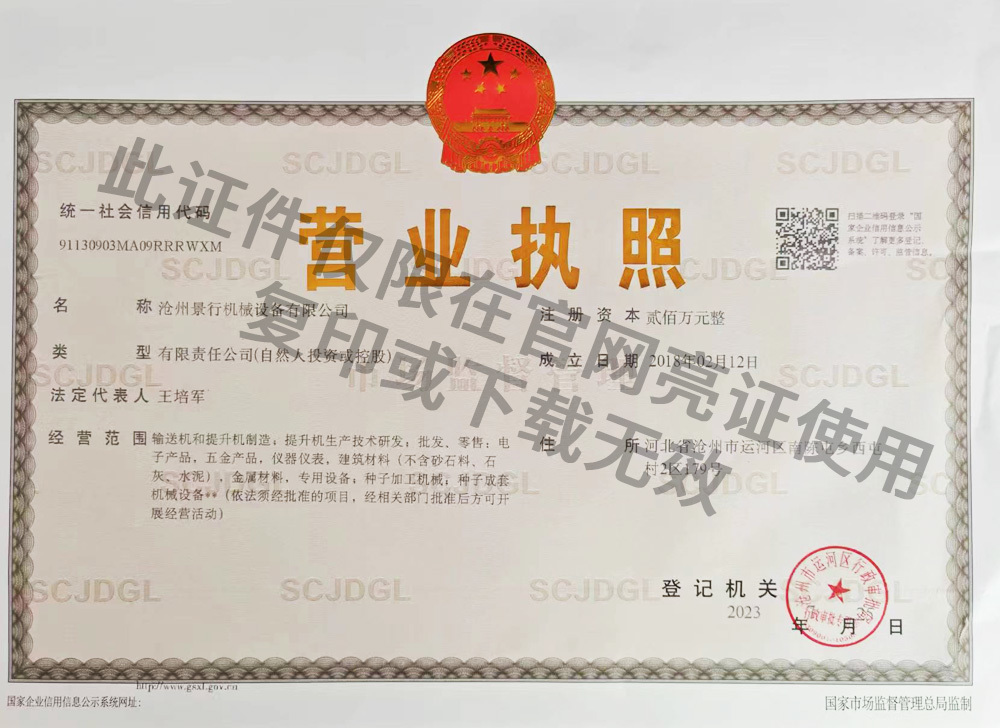
Cangzhou Jinghang Machinery Equipment Co., Ltd. (brand: Jinghang Machinery Equipment) has manufactured conveyors and elevators since its registration in 2018, supplying food, seed, pharmaceutical, chemical, and industrial bulk-handling customers. Beyond new machines, the company supports the installed base with replacement buckets, chains, sprockets, and wear parts, using drawing confirmation so every spare fits the first time. This guide reflects maintenance practice on real Jinghang elevators rather than generic advice.
Conclusion
Spare-part buying for a bucket elevator is a measurement discipline, not a brand hunt. Capture the bucket A-E dimensions, chain pitch, and sprocket bore; choose bucket material by product; replace chains and sprockets as matched sets; and keep a written inspection schedule. Buyers who do this convert unplanned stops into planned weekend swaps — and that is where elevator availability is won or lost.
Contact Jinghang Machinery Equipment at info@jangangelevator.com with your model and dimensions for a confirmed-fit spare-parts quotation.
Related News
How Does Moisture Affect Bulk Material Conveying?
Moisture affects bulk material conveying by changing flowability, adhesion, bulk density, particle cohesion, and the likelihood of buildup inside buckets, chutes, and discharge points.
How Do You Match a Bucket Elevator to Existing Equipment?
To match a bucket elevator to existing equipment, buyers must verify material flow, required throughput, inlet and discharge elevations, connection dimensions, control signals, and the operating limits of upstream and downstream machines.
Contact Us
Cangzhou Jinghang Machinery Equipment Co., Ltd.
Add:Xitun East Road, Nanchentun Town, Yunhe District, Cangzhou City, Hebei Province, China
Contact:Manager Wang
WhatsApp:lyh520wpj
Facebook:lyh520wpj@gmail.com
Mobile:+86-18713706961
E-mail:info@jinghangelevator.com
Focus on us

Consultation
We will contact you within one working day. Please pay attention to your email.
Cangzhou Jinghang Machinery Equipment Co., Ltd. | Powered by www.300.cn | SEO | Business license | Privacy Policy