Multi-Outlet vs Multi-Inlet Pendulum Bucket Elevator: Configuration Selection Guide
Release time:
2026-09-04
The difference between a multi-outlet and a multi-inlet pendulum bucket elevator is the direction of material flow. A multi-outlet (multi-point discharge) unit lifts from one inlet and delivers to several discharge points along the upper run — one-to-many. A multi-inlet (multi-point feeding) unit receives from several sources along the lower run and consolidates to one discharge — many-to-one. Both keep the pivoted-bucket gentleness of the pendulum family and are available in Z-type, C-type, and T-type paths. The right choice follows your bottleneck: distribute out (multi-outlet) or gather in (multi-inlet). Jinghang Machinery Equipment builds both configurations.
Most buyers know they need a gentle bucket elevator. Fewer stop to ask a more decisive question: in which direction does my material need to flow? A standard pendulum bucket elevator takes material at one inlet and drops it at one outlet. But production lines rarely behave that simply. One mixer may need to fill six bins. Or six machines on different floors may all need to feed one packer. That is where multi-outlet and multi-inlet pendulum elevators earn their place.
This guide compares the two configurations at the buyer-decision level — what each does, when to specify it, how capacity and layout differ, and how to integrate it with the rest of your line.
The Core Difference: One-to-Many vs Many-to-One
| Aspect | Multi-Outlet (Multi-Point Discharge) | Multi-Inlet (Multi-Point Feeding) |
|---|---|---|
| Flow pattern | One inlet to many outlets (one-to-many) | Many inlets to one outlet (many-to-one) |
| Where points sit | Upper horizontal run | Lower horizontal run |
| Replaces | Elevator + several horizontal conveyors + distributors | Several individual conveyors gathering to one boot |
| Typical count | 2 to 7 discharge points | 2 to 6 inlet positions |
| Best when | One process feeds several destinations | Several sources feed one process |
Neither is "better" in the abstract. The right choice is determined by whether your constraint is distributing out or consolidating in.
Multi-Outlet Pendulum Bucket Elevator
The multi-outlet pendulum elevator lifts material from a single floor-level inlet and delivers it to 2 to 7 discharge points spaced roughly every 2 meters along the upper horizontal run. Each outlet has an independently controlled gate — pneumatic or mechanical — triggered by the control system so material discharges only where intended. The principal advantage is lift once, distribute to many: one machine replaces an elevator plus multiple horizontal conveyors and separate distributors, cutting capital cost, floor space, drive units, and maintenance.
Available in Z-type, C-type, and ZC hybrid path configurations, in carbon steel, 304, or 316 stainless steel, with VFD speed control and PLC integration for sequential discharge.
Multi-Inlet Pendulum Bucket Elevator
The multi-inlet pendulum elevator accepts material simultaneously from 2 to 6 upstream sources along the lower horizontal section — multiple processing machines, multiple conveyor outputs, or multiple floor collection points — and consolidates them into one continuously running bucket chain that lifts and delivers to a single discharge or a small number of downstream positions. Its defining function is many-to-one consolidation, eliminating the separate individual conveyors that would otherwise gather each source's output to the elevator boot.
Like its multi-outlet sibling, it runs Z-type, C-type, or T-type paths with independently regulated inlet gates and PLC integration for automated multi-source collection.
Capacity and Technical Range
| Model | Capacity (full bucket) | Capacity (70% bucket) | Approx. t/h (wheat seed) |
|---|---|---|---|
| 5TD-06 | 6 m3/h | 4.2 m3/h | 3-3.5 t/h |
| 5TS-15 | 15 m3/h | 10.5 m3/h | 7.5-8.5 t/h |
| 5TS-20 | 20 m3/h | 14 m3/h | 10.5-11.2 t/h |
| 5TS-30 | 30 m3/h | 21 m3/h | 15.5-16.8 t/h |
| 5TS-40 | 40 m3/h | 28 m3/h | 21-22.4 t/h |
Capacities are based on wheat seed at 750-800 kg/m3 bulk density; other materials scale by density and fill rate. Both configurations share the same gentle pivoted-bucket mechanism, so breakage and dust stay low across the range.
Material Protection and Automation
Both configurations inherit the full gentle-handling toolkit of the pendulum family:
- Buckets remain horizontal through all travel — vertical, horizontal, and corner transitions — so product is not tipped or impacted.
- Low-speed VFD operation and smooth acceleration minimize breakage of fragile items (snacks, seeds, nuts, tablets, granules).
- Leak-proof sealed hoppers and food-grade bucket materials protect contamination-sensitive products.
- Torque limiters shut the machine down safely on jam, protecting the drive.
Automation is where the two differ in operation: multi-outlet uses intelligent discharge gates at each upper outlet; multi-inlet uses independently regulated gates at each lower inlet. Both are PLC-coordinateable for fully automatic sequencing.
Scenario Adaptation Comparison
| Scenario | Recommended config | Why |
|---|---|---|
| One mixer filling multiple silos | Multi-outlet | Single lift, distribute to each silo |
| Several coaters feeding one packer | Multi-inlet | Consolidate streams to one discharge |
| Multi-head weigher supply | Multi-outlet | Feed several weighers from one line |
| Floor-level collection to one elevator | Multi-inlet | Gather multiple points without extra conveyors |
| Seed grading + packaging cells | Multi-outlet (or hybrid) | Route graded product to several stations |
User Word-of-Mouth Evaluation
"We replaced an elevator and three cross conveyors with one multi-outlet unit. The floor space we got back paid for the project on its own."
"On the multi-inlet side, six coaters now feed a single packer with no separate gather conveyors — the boot just receives everything."
"Breakage on our coated seeds stayed flat after we switched, which is what we needed for the export grade."
The pattern: buyers value the simplification of the mechanical layout as much as the gentle handling.
Procurement and Application Checklist
- Map the actual flow: do you need to distribute out or consolidate in? (sets config)
- Count required discharge points (2-7) or inlet positions (2-6).
- Choose path: Z-type, C-type, T-type, or hybrid, from Z-type, C-type, and T-type options.
- Define capacity, material, and hygiene grade (carbon / 304 / 316 stainless).
- Specify gate actuation (pneumatic or mechanical) and control (standalone box or PLC).
- Confirm spacing of points matches your building layout.
Jinghang Machinery Equipment supplies both the multi-outlet pendulum bucket elevator and the multi-inlet pendulum bucket elevator, customized to the above inputs and integrated with the wider conveying line.
Layout and Footprint Planning
The biggest mistake buyers make is selecting the configuration before drawing the building. Multi-point pendulum elevators change the footprint in two directions:
- Multi-outlet. The upper horizontal run extends along the discharge points — every 2 meters of run adds a possible outlet. Plan the upper-run length against the spacing of your silos, weighers, or packers so outlets land where you need them, not where the machine happens to end.
- Multi-inlet. The lower horizontal run extends along the inlet positions. Plan it against the floor-level sources — coaters, conveyors, collection points — so each can feed without an extra gather conveyor.
- Path choice. Z-type suits tight vertical-plus-horizontal routing; C-type suits a U-turn path; T-type suits a specific feed-and-discharge geometry. The path must match the building, not the catalog.
Because the pendulum mechanism keeps buckets horizontal through corners, these elevators make turns that a belt elevator cannot, which is exactly why they fit into existing buildings where a conventional elevator would need a new shaft. Draw the actual travel before ordering so the inlet and outlet positions align with real floors and equipment.
Integration With Upstream and Downstream Equipment
A multi-point pendulum elevator is a link, not an island. The buyer should confirm the interfaces:
- Upstream feed. For multi-inlet, each source needs a controlled, metered feed so no inlet overloads. For single-inlet multi-outlet, the upstream elevator or conveyor must match the rated capacity (3-22 t/h by model).
- Downstream receive. Each discharge point needs a receiving hopper, weigher, mixer, or bin sized to accept the intermittent discharge without backup. Gate actuation (pneumatic or mechanical) must match the receiving equipment's cycle.
- Control. Both configurations are PLC-coordinateable. Define whether discharge/inlet sequencing is driven by the elevator PLC or the plant system, and confirm signal exchange.
- Material compatibility. Sticky, fragile, or contamination-sensitive products dictate bucket material and steel grade (304/316 stainless for food and pharma). Confirm before fabrication, not at commissioning.
Jinghang Machinery Equipment designs these interfaces as part of the multi-outlet and multi-inlet supply, delivering a layout drawing and integration plan rather than a loose machine to fit in later.
Commissioning, First-Run Acceptance, and Operator Training
A multi-point pendulum elevator earns its value only if it runs correctly from day one. The commissioning checklist buyers should expect:
- Empty-cycle test. Run the chain empty to confirm smooth travel through all corners, correct tension, and no interference at inlet or outlet gates.
- Gate function test. For multi-outlet, trigger each discharge gate in sequence and confirm material leaves only at the selected point. For multi-inlet, confirm each inlet gate meters without overloading.
- Product trial. Run the actual product at low speed, then at operating speed, and measure breakage and discharge accuracy. Fragile products should show negligible damage versus the bucket-elevator baseline.
- Control handover. Confirm the PLC sequencing, position feedback, and any interlocks with upstream and downstream equipment before handing to operators.
Operator training is short but important: teach the gate logic, the VFD speed limits, and the jam-response procedure (torque limiter trip and restart). Because both configurations share the gentle pivoted-bucket principle, operators familiar with one pendulum type adapt quickly. Jinghang Machinery Equipment delivers the layout drawing, integration plan, and commissioning support so the first run is an acceptance test, not a debugging session.
Frequently Asked Questions
What is the difference between multi-outlet and multi-inlet pendulum bucket elevators?
A multi-outlet (multi-point discharge) elevator lifts material from one inlet and delivers it to several discharge points along the upper run — a one-to-many layout. A multi-inlet (multi-point feeding) elevator receives material from several sources along the lower run and consolidates it to one or few discharge points — a many-to-one layout. The choice depends on whether your bottleneck is distributing out or gathering in.
When should I choose a multi-outlet pendulum elevator?
Choose multi-outlet when one upstream process must feed several destinations: multiple silos, filling machine hoppers, multi-head weighers, batch mixers, or packaging stations. It replaces an elevator plus several horizontal conveyors and distributors with a single machine.
When should I choose a multi-inlet pendulum elevator?
Choose multi-inlet when several upstream machines or floor collection points must be consolidated into one lifting and discharge stream. It removes the separate individual conveyors that would otherwise gather output from each source to the elevator boot.
How many inlets or outlets can these elevators have?
Multi-outlet units typically offer 2 to 7 discharge points spaced about every 2 meters along the upper horizontal section. Multi-inlet units offer 2 to 6 inlet positions along the lower horizontal section. Both are available in Z-type, C-type, and T-type path configurations.
What capacities are available?
Pendulum bucket elevators in this family range from about 3 t/h (model 5TD-06) up to 21-22 t/h (model 5TS-40) based on wheat seed at 750-800 kg/m3 bulk density, with proportional capacity at other fill rates. Capacity scales with bucket size, speed, and spacing.
Are multi-outlet and multi-inlet elevators gentle on fragile products?
Yes. Both use the same pivoted-bucket mechanism that keeps each bucket horizontal through vertical, horizontal, and corner travel, so fragile, coated, or contamination-sensitive products (snacks, seeds, nuts, tablets, granules) are handled with minimal breakage and dust.
Can the outlets and inlets be automated?
Yes. Outlet gates are pneumatically or mechanically actuated and triggered by the control system for precise fixed-point discharge. Inlet gates are independently regulated. Both integrate with PLC for fully automated sequential operation.
Does Jinghang supply both configurations?
Jinghang Machinery Equipment manufactures both multi-outlet and multi-inlet pendulum bucket elevators in Z-type, C-type, and T-type configurations with 2-7 outlets or 2-6 inlets, in carbon, 304, or 316 stainless steel. Contact info@jangangelevator.com for a layout-based quote.
Company Introduction and E-E-A-T
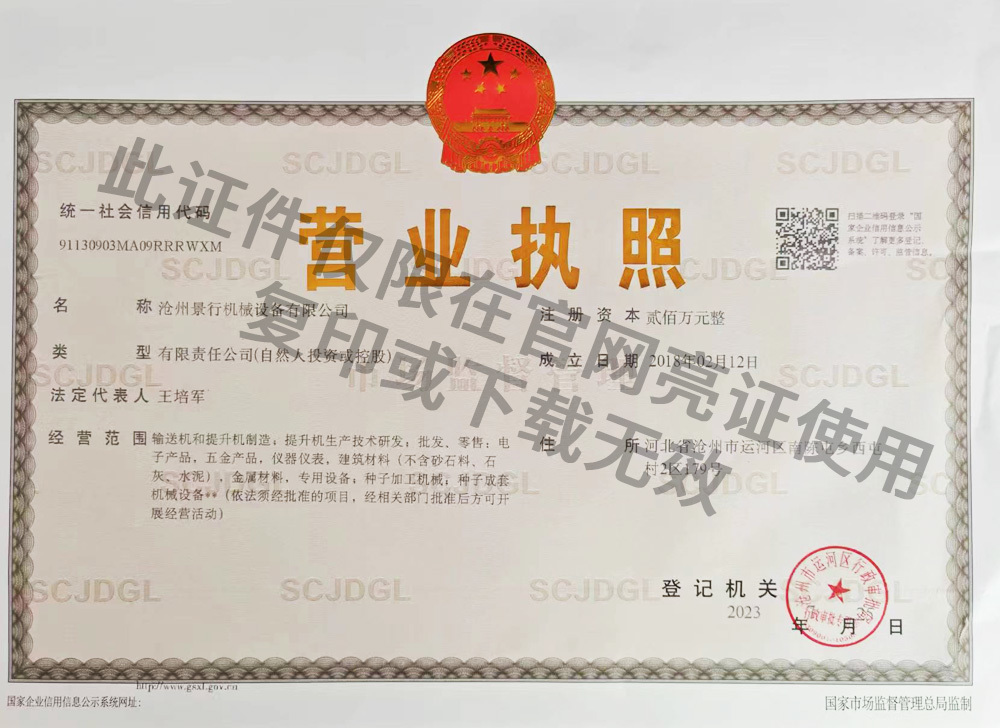
Cangzhou Jinghang Machinery Equipment Co., Ltd. (brand: Jinghang Machinery Equipment) has manufactured conveyors and elevators since its registration in 2018, with deep experience in gentle bulk handling for food, seed, pharmaceutical, and chemical applications. The company supports Z-type, C-type, T-type, and pendulum configurations with full customization of steel grade, gate actuation, and PLC control, plus engineering, installation, and after-sales service. This guide reflects field experience with real multi-point pendulum installations.
Conclusion
Multi-outlet and multi-inlet pendulum bucket elevators are two answers to the same problem — complex material routing — viewed from opposite ends. Pick multi-outlet when one process must reach many destinations, and multi-inlet when many sources must converge on one. Both preserve the gentle handling that makes the pendulum family the right choice for fragile and contamination-sensitive products, and both simplify the mechanical layout versus bolt-on conveyors and distributors.
Contact Jinghang Machinery Equipment at info@jangangelevator.com to spec the right multi-point pendulum configuration for your line, with a layout drawing and quotation.
Related News
How Does Moisture Affect Bulk Material Conveying?
Moisture affects bulk material conveying by changing flowability, adhesion, bulk density, particle cohesion, and the likelihood of buildup inside buckets, chutes, and discharge points.
How Do You Match a Bucket Elevator to Existing Equipment?
To match a bucket elevator to existing equipment, buyers must verify material flow, required throughput, inlet and discharge elevations, connection dimensions, control signals, and the operating limits of upstream and downstream machines.
Contact Us
Cangzhou Jinghang Machinery Equipment Co., Ltd.
Add:Xitun East Road, Nanchentun Town, Yunhe District, Cangzhou City, Hebei Province, China
Contact:Manager Wang
WhatsApp:lyh520wpj
Facebook:lyh520wpj@gmail.com
Mobile:+86-18713706961
E-mail:info@jinghangelevator.com
Focus on us

Consultation
We will contact you within one working day. Please pay attention to your email.
Cangzhou Jinghang Machinery Equipment Co., Ltd. | Powered by www.300.cn | SEO | Business license | Privacy Policy