Why Pendulum Bucket Elevators Suit Fragile Granules and Powders
Release time:
2026-11-02
Why Pendulum Bucket Elevators Suit Fragile Granules and Powders
Moving granular or powdered material from one elevation to another sounds simple. Get a bucket, hang it on a chain, and pull. But anyone who has seen a conveying line spit out cracked prills, crushed pellets, or a dust cloud that triggers the plant’s air-quality alarms knows the hidden complexity. Fragile granules and fine powders react poorly to impact, centrifugal force, and friction. A standard high-speed belt bucket elevator can turn a load of urea or expanded perlite into fines and rejects before it reaches the top floor. That is where the pendulum bucket elevator changes the economics of gentle handling.
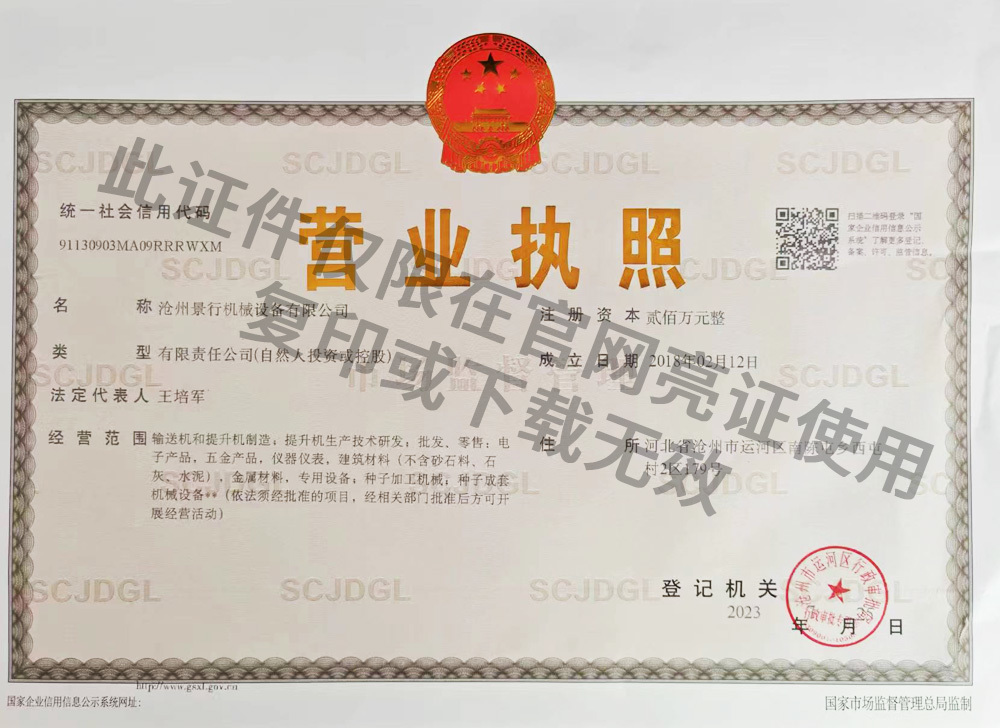
The pendulum design — sometimes called a suspended or gravity‑discharge bucket conveyor — has been refined over decades to move materials without the abuse common to centrifugal discharge machines. At Jinghang Machinery, the team builds these conveyors inside a factory registered in Cangzhou in 2018, with a business scope that includes conveyor and elevator manufacturing as well as seed processing machinery. The work involves daily conversations with processors who need to protect particle size, avoid segregation, and meet strict dust‑emission targets. This article pulls together field observations, design principles, and performance data to explain why a pendulum layout so often wins when the material is delicate and the margin for degradation is thin.
What makes a granule “fragile” in a conveying context
Fragility doesn’t always show up on a data sheet. Sometimes it reveals itself only after the product has bounced through a few transfer points. A prilled fertilizer with a crush strength of 2.5 kg is perfectly stable in a bag; drop it half a meter onto a hard steel surface and 5–8 % of the particles may fracture. Spray‑dried milk powder agglomerates maintain their porosity only if they aren’t scraped along a steel chute. Even apparently robust plastic masterbatch granules can generate micro‑dust when spun out of a bucket at 2.5 m/s.
The forces that damage bulk solids are mechanical: impact on loading, compression inside the bucket, shear against the casing, and the catapult effect at the head pulley. Centrifugal discharge elevators — the familiar belt‑and‑bucket units running at 1.8–3.5 m/s — rely on the head pulley’s rotation to fling material out. A portion of that material hits the discharge throat or the back of the preceding bucket. When the product is a fine powder, much of it can become airborne inside the casing, creating a combustible dust risk. When it is a granule, cracks and fines appear immediate. That fines generation is not just a quality problem; it creates dust that must be captured, increases cleaning cycles, and can raise the risk of a dust explosion under the right conditions. The ATEX directive and NFPA 61 for agricultural processing plants both treat fines accumulation as a primary hazard.
How a pendulum bucket elevator changes the handling physics
A Pendulum Bucket Elevator works on a fundamentally different discharge principle. Instead of spinning the buckets around a small‑radius pulley, the buckets hang from two chains in a way that keeps them in a near‑vertical orientation throughout the circuit. They travel up one leg, cross over a sprocket assembly without inverting, and descend with the open side still facing upward. Discharge happens not by centrifugal force but by gravity when the bucket reaches the required height and a tipping mechanism gently rotates it. The speed is deliberately low — typical chain velocities range between 0.3 m/s and 1.0 m/s — which eliminates the high‑energy impact of centrifugal throw.
That slower pace and gravity‑assisted discharge transfer directly into preserved particle integrity. In comparative trials run on a similar type of conveyor, a granular NPK fertilizer with a starting size guide number (SGN) of 340 and a uniformity index of 55 showed less than 1.2 % degradation when handled by a pendulum‑type elevator operating at 0.5 m/s, versus 6–9 % degradation in a conventional centrifugal elevator running at 2.2 m/s. While those numbers depend on formulation and bucket geometry, they illustrate the order‑of‑magnitude difference that discharge mode alone can deliver.
The buckets themselves contribute. Most pendulum elevator buckets on the market are injection‑molded from polyethylene or cast from nylon, offering a smooth, non‑stick surface. There is no sharp metal lip that scrapes the bottom of the boot section; feeding is done by flooding or by a controlled inlet chute that keeps material velocity low. Because the buckets do not rub against a fixed casing at high speed, fines generation from abrasion drops sharply. That also drops the load on the housekeeping line and the Dust Collector that services the elevator head. In many plants, operators report that switching from a centrifugal unit to a pendulum unit halved the number of times they needed to empty the dust collector’s hopper each week.
Where the rubber meets the road: real‑world fragile materials
Think about the materials that cause the most headaches in a plant:
- Prilled and granular urea: hygroscopic, prone to caking, and easy to crush during handling. Typical crush strength can range from 2 to 4 kg per prill.
- Expanded perlite and vermiculite: ultra‑light, highly abrasive to metal, and will turn to dust under almost any shear.
- Animal feed pellets: a diameter of 2–6 mm and a pellet durability index (PDI) that customers specify at 95–98 %. Dropping that PDI by even 3 % can trigger a rejected load.
- Seed‑coating batches: expensive polymer films and biological inoculants that must remain intact for viability.
- Fine‑powder catalysts and additives: product value might be $20–80 per kilogram; every dust‑bag of lost material is a direct profit hit.
For each of these, the pendulum elevator’s design — gentle filling, slow transport, gravity discharge — matches the material’s tolerance window far better than a centrifugal system does. When a processor also needs to direct the flow to multiple bins or packaging lines, the addition of a Material distribution machine creates a complete handling loop that keeps degradation low from receiving through to final distribution.
System integration: the quiet partner behind low‑breakage performance
An elevator never works alone. The feed into the boot and the discharge transition at the top are the two points where most damage occurs, often independent of the elevator’s internal design. A pendulum bucket elevator’s low‑speed boot section can be matched with a rotary valve or vibratory feeder that meters material at a rate the buckets can accept without over‑spilling. Over‑spill leads to recirculation inside the boot — a well‑known source of attrition — so maintaining a steady feed is crucial. One effective arrangement pairs the elevator with a distribution machine that splits flow evenly at the discharge point, eliminating the need for dead‑plates or steep chutes that could fracture falling granules.
The same system planning extends to dust control. A pendulum elevator naturally generates less airborne dust than a centrifugal machine because there is no impact‑driven puff at the head. Still, any moving bulk solid creates some fines, especially if it contains a fraction of already‑broken particles from upstream equipment. A pulse‑jet dust collector sized for the casing volume, with filtration cartridges rated at MERV 13 or higher, can keep the head‑space concentration well below 10 mg/m³. That figure aligns with typical permit requirements in jurisdictions following European or North American air‑quality guidelines for particulate matter. At Jinghang, the ability to supply the elevator, the distribution machine, and the dust collector from a single source — with engineering that ties the three components together — helps customers avoid the finger‑pointing that can happen when different vendors’ equipment doesn’t communicate well.
What the numbers say: comparing elevator types for fragile materials
| Elevator type | Typical chain/belt speed (m/s) | Discharge method | Expected breakage for 3 mm brittle pellets | Dust load at head (typical) |
|---|---|---|---|---|
| Centrifugal belt bucket | 1.8–3.5 | Centrifugal throw | 5–12 % | 20–50 mg/m³ |
| Continuous belt bucket (high‑speed) | 1.0–2.0 | Centrifugal/gravity mix | 3–8 % | 15–30 mg/m³ |
| Pendulum (gravity discharge) | 0.3–1.0 | Gravity via tipping mechanism | 0.5–2 % | <10 mg/m³ |
| Aero‑mechanical conveyor | 3–5 (disc speed) | Centrifugal at outlet | 2–6 % | Variable |
Data ranges are based on published manufacturer literature, VDMA 23110 guidelines for degradation testing, and field audits in agricultural and chemical processing. Individual results depend on bulk density, particle strength, bucket fill level, and ambient humidity.
The table shows a clear trend: slower speed and non‑impact discharge correlate strongly with lower breakage and lower dust. The pendulum bucket elevator’s operating window — under 1 m/s — keeps the kinetic energy transferred to the particle below the threshold at which most organic and mineral granules fracture. That window, combined with the fact that the bucket material itself is a polymer rather than hardened steel, has made the pendulum design a default choice in the seed‑processing sector, where one broken seed can reduce germination rate. ISO 21283:2018, which covers the determination of mechanical damage in seeds, provides a testing framework that many seed processors apply when qualifying conveying equipment.
Making the investment pencil out
The initial capital cost of a pendulum bucket elevator is often higher than that of a centrifugal bucket elevator of the same capacity, mainly because the chain track, sprocket assembly, and tipping gear require more parts and tighter alignment. However, a procurement decision based on upfront price alone frequently misses three downstream savings:
- Yield loss recovery. If a plant handles 5 tonnes per hour over two shifts for 300 days per year, a 5 % reduction in breakage saves 120 tonnes of product that doesn’t end up in the fines bin or the dust collector. At a conservative product value of $300 per tonne, that’s $36,000 per year in revenue retained, not spent.
- Dust collection operating cost. A lower dust load means filter cartridges last longer, fan energy drops, and the risk of a reportable opacity exceedance declines. Many plants find that the dust collector serving a pendulum elevator can be 30–40 % smaller in design air volume than one on a centrifugal elevator, cutting capital and running expenses on the baghouse side.
- Cleaning and downtime. Gentle handling reduces buildup inside buckets and casing. In food and pharmaceutical applications where frequent washdowns are mandatory, the smoother internal profile and elimination of abrasive contact mean faster cleaning and shorter changeover windows.
Pitfalls that still catch operators
A pendulum bucket elevator — even when engineered well — will underperform if the upstream and downstream conditions aren’t right. The most common misstep is over‑feeding the boot. When the boot fills past the bucket’s natural fill point, material is forced between the bucket and the casing, creating a grinding action that produces fines no matter how gentle the discharge is. The fix is straightforward: match the feed device’s capacity to the elevator’s rated intake, and configure the boot with a level sensor that can slow or stop the feeder before the fill limit is reached.
Another trap is underestimating the importance of bucket material selection. Not all pellets are dry and hard. Some, like oil‑coated urea or hot‑melt adhesive prills, can become sticky at ambient plant temperatures. In those cases, a standard polyethylene bucket may accumulate buildup, eventually dropping chunks of material that interfere with the tipping mechanism. Nylon or polyurethane buckets with a food‑grade release surface can often solve the problem, but they need to be specified early in the project.
Finally, there is the temptation to run the elevator faster to squeeze out more capacity. Because the pendulum design’s low degradation is directly tied to low speed, increasing chain speed even from 0.5 m/s to 0.8 m/s will raise the impact energy at the discharge arc. Any speed change should be accompanied by a new breakage assessment — preferably with a sample test using the actual product — before committing to the throughput increase.
Frequently Asked Questions
Can a pendulum bucket elevator handle powders finer than 100 mesh?
Yes, pendulum elevators are routinely used for powders with particle sizes down to 5–10 µm, including talc, calcium carbonate, and flour. The key adjustments are bucket shape (deeper, with a steep discharge angle to avoid packing) and a controlled feed to prevent flooding. Many installations pair the elevator with a pulse‑jet dust collector to maintain negative pressure and minimize airborne fines.
How does a pendulum elevator compare with a tubular drag conveyor for gentle handling?
Tubular drag conveyors can also deliver very low breakage, often under 1 %, because they move material in a solid column between discs. Pendulum bucket elevators offer a distinct advantage when the vertical lift is more than 20 meters or when multiple discharge points are needed at different heights without additional transfer equipment. The choice often comes down to headroom, capacity, and how the material reacts to being pushed versus being lifted in open buckets.
What maintenance routine keeps breakage rates low over time?
Beyond standard chain lubrication and sprocket inspection, the single most important maintenance item is checking bucket alignment and wear. A worn bucket lip or a misaligned tipping cam can change the discharge trajectory, causing particles to strike the casing or the return strand. Most operators schedule a visual inspection every 500 operating hours and perform a degradation benchmark test once per year using a retained sample to confirm that mechanical wear hasn’t shifted the breakage curve.
Can sticky or hygroscopic products be lifted without bucket carry‑back?
Yes. Selecting a bucket material with low surface energy, such as UHMWPE or PTFE‑lined nylon, significantly reduces adhesion. In addition, installing a brush‑cleaner station at the head, where the inverted bucket passes over a stationary brush, can scrape off any residue before it returns to the boot. For extremely sticky materials, a combination of bucket release coating and boot‑area ventilation to control humidity often solves the problem.
From specification to start‑up: a few tested pointers
When an engineering team begins a project that involves fragile granules or powders, a few ground rules can spare them from a steep learning curve. First, request a lab‑scale breakage test from the elevator manufacturer. At Jinghang, for instance, customers can send a sample of their material, and the technical group will run it through a test unit to quantify particle size distribution before and after handling. That step generates real data, not just catalog promises.
Second, treat the elevator as one link in a chain. Spend as much time on the inlet feed chute geometry and the discharge transition as on the elevator internal components. A poorly designed inlet that lets product cascade uncontrolled into the boot can destroy more particle integrity than the elevator itself.
Third, think about future changes. If there is any chance the plant will handle a second product with different fragility or flow characteristics, specify adjustable bucket speeds (via a VFD on the drive motor) and consider an interchangeable bucket design. That flexibility can often be built in for a relatively small adder.
The pendulum bucket elevator’s value proposition — low breakage, low dust, and quiet operation — is not theoretical. It is grounded in the simple mechanics of gravity discharge and slow chain motion. For materials that crack under the stress of higher‑speed systems, this approach consistently delivers a granular or powdered product that looks like it did when it entered the boot. When the layout also includes a matched material distribution machine and a properly sized dust collector, the entire handling line reinforces that outcome. That is why, for industries where particle quality governs the final sale price, the pendulum concept continues to be the first candidate on the shortlist.
Related News
Contact Us
Cangzhou Jinghang Machinery Equipment Co., Ltd.
Add:Xitun East Road, Nanchentun Town, Yunhe District, Cangzhou City, Hebei Province, China
Contact:Manager Wang
WhatsApp:lyh520wpj
Facebook:lyh520wpj@gmail.com
Mobile:+86-18713706961
E-mail:info@jinghangelevator.com
Focus on us

Consultation
We will contact you within one working day. Please pay attention to your email.
Cangzhou Jinghang Machinery Equipment Co., Ltd. | Powered by www.300.cn | SEO | Business license | Privacy Policy