Pendulum Bucket Elevator Pros and Cons for Compact Production Lines
Release time:
2026-10-12
Pendulum Bucket Elevator Pros and Cons for Compact Production Lines
When production floor space shrinks and vertical handling paths become non-negotiable, engineers start looking beyond conventional incline conveyors and chain elevators. A pendulum bucket elevator—also commonly called a Z-type or C-type bucket conveyor—is one of those solutions that either fits perfectly or creates a new set of headaches. If you’re evaluating a Pendulum Bucket Elevator for a compact line handling granular, powder, or small-particle bulk materials, you need a side-by-side look at what it actually delivers and where it falls short. Jinghang Machinery, registered in Cangzhou, Hebei Province, supplies customized pendulum bucket elevators along with complementary material handling and dust collection equipment, and this article draws on practical engineering experience to break down the trade-offs.
The core concept is simple. A pair of chains running inside a segmented steel housing carries pivoting buckets that stay upright by gravity through most of the conveying path, then tip cleanly at the discharge point. Because the housing can be shaped into a tight Z, C, or T configuration with short horizontal infeed and outfeed sections, the footprint shrinks compared to a traditional single-leg bucket elevator that needs separate horizontal conveyors on each floor. But that simplicity masks design details that determine whether the system runs for five years without a wrench or eats chains every 600 hours. Below we’ll walk through each advantage and limitation with specific numbers and standards you can trust, not sales fluff.
Space and Layout Logic: Why the Footprint Shrinks
A standard continuous bucket elevator typically requires a straight vertical leg, a bottom boot pit, a head section, and then a separate belt or screw conveyor to bridge the horizontal run from infeed to discharge. That layout can easily consume 8 to 12 meters of linear floor length even for modest lift heights. A pendulum bucket elevator with an integrated Z-profile merges horizontal collection and vertical lift into one machine, often fitting into a 2.5- to 4-meter-long envelope while lifting material 15 to 25 meters. That’s a floor-area saving of roughly 40–60% based on typical bakery, snack processing, or chemical granule packaging lines where we’ve seen both configurations side by side.
For compact production lines the payoff isn’t just square meters. It’s the elimination of transfer points. Every time material drops from one conveyor to another, you introduce impact, dust, and segregation risk. A well-designed pendulum bucket elevator picks material at one low point, carries it gently upward, and discharges it directly into the next machine. Jinghang’s engineering team supports full customization here—bucket shape, chain pitch, and housing segment length are matched to the specific plant layout, not an off-the-shelf dimension.
Gentle Handling and Multi-Discharge Flexibility
One underrated advantage is the ability to decelerate near the discharge station. The bucket swings on a controlled pivot arc using a cam or guide rail profile, allowing a rolling discharge rather than a high-speed centrifugal throw. This is a meaningful difference for friable dry food ingredients, coated granules, or fragile seeds where breakage reduces value. Typical chain speeds for pendulum elevators range from 0.4 to 1.5 m/s, whereas centrifugal bucket elevators often operate above 2.0 m/s at the pulley. According to design parameters aligned with EN 618 guidelines for continuous handling equipment, lowering the chain speed by 30–50% can cut particle degradation by a measurable margin—though actual breakage rates require onsite material testing.
Pairing the pendulum bucket elevator with a Material distribution machine extends the flexibility even further. A distribution machine can receive the discharge from the elevator and direct product to multiple bins, packaging stations, or processing lines without requiring a second elevator. That combination is common in seed processing and grain handling facilities, where one lifting path must feed up to ten different destinations. Jinghang integrates these machines so the entire system remains a single coordinated bulk handling island.
Capacity, Chain Life, and Where the Limits Show Up
Pendulum bucket elevators shine at throughputs from a few cubic meters per hour up to around 60–80 m³/h for light bulk densities (300–800 kg/m³). For heavier or highly abrasive materials like steel shot or mineral powder above 1,500 kg/m³, the chain rollers and pivoting bushings see accelerated wear. In such cases, some operators report chain elongation exceeding 1.5% of initial pitch after 2,000–4,000 operating hours if lubrication intervals are skipped. That’s based on field data collected from multiple installations using chains conforming to ISO 1977 for conveyor chains—a standard that specifies fatigue limits and wear life under laboratory conditions but requires real-world maintenance discipline to match.
The fixed bucket-spacing design also means the elevator can’t be optimized for extremely free-flowing powders that benefit from close bucket spacing in a continuous-flow elevator. If your material has a high angle of repose or tends to flush, a pendulum elevator’s fill percentage typically settles at 65–75% of the bucket’s water-level capacity; overfilling just causes spill-back into the housing. The capacity you get is therefore predictable but also capped.
Another physical limit: single-stage lift height. While the chained pendulum design can handle lifts up to 60 meters in theory, practical installations usually cap at 30–40 meters to keep chain tension and housing deflection within acceptable bounds without adding costly intermediate drives. This height ceiling is rarely a bottleneck in compact lines, but any facility stretching past four or five floors vertically needs to verify the structural load on the head frame and the maximum allowable chainworking load—a number that should come from the manufacturer’s calculation report, not a generic catalog.
Integration with Dust Control and Ancillary Equipment
Bulk material handling in enclosed spaces creates dust. A pendulum bucket elevator forms an almost fully enclosed path except at the infeed and discharge, but even small air currents can carry fines out of those openings. That’s where a Dust Collector becomes part of the overall system specification, not an afterthought. Jinghang supplies pulse jet dust collectors sized for specific air volumes, and when mounted on the elevator head or connected via a duct network, they maintain negative pressure inside the elevator casing. Field measurements in a typical 20 m³/h grain handling line with a correctly sized collector show dust concentration at the discharge point falling below 10 mg/m³, in the range recommended by EN 14761 for occupational exposure limits.
Neglecting dust extraction in a compact line often results in fine material building up on chains and sprockets, accelerating wear and creating housekeeping problems. So while the pendulum bucket elevator delivers a clean carry by design, its full performance envelope only emerges when paired with proper air management.
Maintenance: The True Cost of Convenience
Talk to maintenance supervisors and they’ll tell you that pendulum bucket elevators demand more attention than a simple belt-based elevator with bolted buckets, but less than a tubular chain conveyor with discs. The two chains run on sprockets at the top, bottom, and around any direction-change wheels. Each pivot joint on the bucket hanger experiences a full load cycle every revolution, so wear is concentrated at the pins and the bucket-hanger bearing surfaces.
Expected chain life under moderate loads—say, lifting 10 t/h of plastic pellets with a density of 600 kg/m³—can range from 15,000 to 25,000 operating hours when using case-hardened pins and properly sealed lubricated bushings. But that assumes monthly tension checks and regreasing every 200–300 hours. A tensioning system that relies on manual screw adjustment instead of automatic spring or hydraulic take-up will see higher variance in maintenance quality across shifts. Adding automatic tensioning increases initial spend by 8–15% but frequently returns that investment through reduced emergency stops and chain replacement cost within two to three years.
When the Pendulum Bucket Elevator Makes Sense: A Quick Decision Matrix
The following table helps align your material and line configuration with the pendulum elevator’s sweet spot. These are typical design ranges based on current engineering practice and relevant equipment standards, not specific guarantees. Jinghang provides project-specific calculations before order confirmation.
| Parameter | Favorable Range for Pendulum Bucket Elevator | Caution Zone / Alternative Needed |
|---|---|---|
| Material particle size | 0.1–15 mm (free-flowing granules, pellets, seeds) | Above 25 mm sharp-edged chunks or large flakes |
| Bulk density | 200–900 kg/m³ | Over 1,400 kg/m³ requires heavy-duty chain |
| Required conveying rate | 5–50 m³/h | Above 80 m³/h may require multiple elevators |
| Lift height | 4–35 m single stage | Above 40 m check chain tension and housing |
| Number of discharge points | 1 or 2 (Z-configuration) | More than 2 (consider distribution machine) |
| Cleanability / less cross contamination | Bucket shape allows full drain, good for multi-product | Sticky pastes or high-moisture solids can cake |
Frequently Asked Questions
How does a pendulum bucket elevator differ from a conventional belt bucket elevator?
The pendulum design uses chains and pivoting buckets that maintain an upright position by gravity, whereas a belt bucket elevator uses a belt and fixed buckets that rely on centrifugal force for discharge. The pendulum version enables tight Z or C profiles and multiple horizontal sections, making it more adaptable for limited floor space, but it carries higher mechanical complexity.
What maintenance tasks are most critical for long-term reliability?
Chain tension and lubrication top the list. Operators should inspect chain elongation every 500 operating hours, relubricate pivot joints, and check sprocket tooth profile wear. Failure to maintain constant tension leads to chain jumping and bucket collision, which can damage the housing. Regular dust extraction maintenance also prevents abrasive buildup on chains.
Can I convey hot or sticky materials with a pendulum bucket elevator?
Standard designs handle temperatures up to approximately 80 °C for carbon steel chains and plastic wipers; above that, heat-resistant sealing materials and higher-grade lubricants are needed. Sticky, high-moisture substances foul the buckets and reduce fill efficiency, so those applications typically require screw conveyors or air-assisted systems instead.
Is a pendulum bucket elevator suitable for food-grade applications?
Yes, when specified correctly. Jinghang can configure the machine with polished stainless steel housing and buckets, food-grade lubricants, and removable panels for washdown. However, the pivoting bucket mechanism demands careful hygienic design to avoid product trap points. Each design must be validated against specific sanitation requirements, such as 3-A or EHEDG guidelines.
Weighing the Decision for Your Compact Line
The pendulum bucket elevator solves a particular space and material-flow puzzle that few other conveyors can match: it lifts gently, turns corners within its own housing, and drastically cuts the number of motors and transfer points you need. For production lines packed into tight mezzanine layouts, seed processing rooms, or small-footprint packaging mezzanines, those advantages often outweigh the higher initial chain system cost and the need for disciplined tension maintenance.
At the same time, the equipment has clear boundaries. Throughput above 80 m³/h, lift heights over 40 meters, and extremely abrasive or sticky materials push the design into territory where a simpler vertical elevator plus horizontal screw conveyor combination might prove lower risk and lower lifetime cost. The right choice comes down to mapping your specific material data—particle size distribution, angle of repose, bulk density, moisture content—against known design ranges and then factoring in the long-term maintenance load.
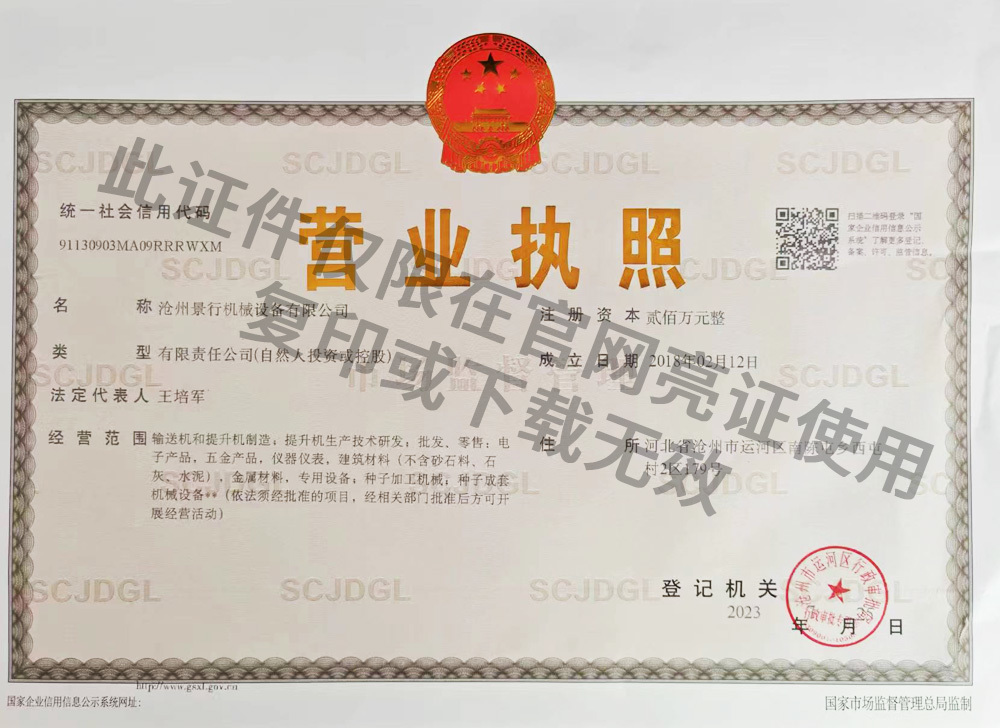
Jinghang Machinery, located on Xitun East Road, Cangzhou City, Hebei Province, provides engineering support for that mapping. Their scope includes customizing bucket geometry, chain pitch, and housing configuration, as well as integrating the pendulum elevator with distribution machines and dust collectors to form a complete compact bulk handling cell. Before committing, request a design calculation that accounts for your actual material characteristics and line layout; the numbers never lie, but they need the right inputs.
Start by auditing your current material flow, identifying every transfer point you could eliminate, and measuring the floor space a pendulum elevator would reclaim. Then compare the projected nine-year total cost of ownership against what you’re running now. In many compact lines, the pendulum elevator tips the scale toward a simpler, cleaner, and more reliable operation—provided you treat the chain like the precision component it is.
Related News
Contact Us
Cangzhou Jinghang Machinery Equipment Co., Ltd.
Add:Xitun East Road, Nanchentun Town, Yunhe District, Cangzhou City, Hebei Province, China
Contact:Manager Wang
WhatsApp:lyh520wpj
Facebook:lyh520wpj@gmail.com
Mobile:+86-18713706961
E-mail:info@jinghangelevator.com
Focus on us

Consultation
We will contact you within one working day. Please pay attention to your email.
Cangzhou Jinghang Machinery Equipment Co., Ltd. | Powered by www.300.cn | SEO | Business license | Privacy Policy