Pendulum Bucket Elevator Guide for Food, Seed, Chemical, and Feed Plants
Release time:
2026-10-28
Pendulum Bucket Elevator Guide for Food, Seed, Chemical, and Feed Plants
Processing plants handling granular or powdered products know one truth: the moment a bucket elevator dumps material, it can either protect your margin or quietly destroy it. Cracked seeds, smeared food products, and combustible dust clouds are not rare anomalies — they are design failures. A pendulum bucket elevator solves this by carrying buckets on a pair of chains that keep them in a non‑tilting, pendulum motion throughout the entire circuit, so product never free‑falls or gets jammed in a bottom boot. This guide unpacks what makes a pendulum design different, how to specify one for food, seed, chemical, and feed environments, and where to focus engineering attention so your vertical lift adds throughput without adding risk.
Key Takeaways
- Pendulum bucket elevators maintain bucket orientation without a tilting moment, reducing product degradation and spillage across discharge and return legs.
- Food‑grade applications demand stainless steel contact surfaces, washdown‑ready seals, and certifications typically aligned with ISO 14159 hygiene design principles.
- Seed processors gain gentler handling because buckets do not dig or scrape material; throughput is retained with fewer split kernels or abraded coats.
- Chemical and feed plants need explosion‑vent panels, static‑conductive belts or chains, and dust‑collection integration to meet NFPA 652 and 654 requirements.
- Customization — outlet spouts, inlet configurations, chain versus belt drives, ATEX‑compliant motor packages — lets a single Pendulum Bucket Elevator serve multiple recipes without cross‑contamination.
Why Conventional Vertical Lifts Struggle With Sensitive Bulk Solids
A typical centrifugal‑discharge bucket elevator scoops product from a boot, accelerates it around a head pulley, and throws it out by force. That works for durable minerals. For roasted coffee beans, coated seeds, pelleted feed, or granulated chemical intermediates, the scoop‑and‑throw action creates three headaches: mechanical impact at the boot, attrition inside the casing, and high dust generation at both inlet and outlet. Research compiled by the American Society of Agricultural and Biological Engineers (ASABE) shows that more than 4 percent of soybean seed mechanical damage can be traced to bucket elevator handling when using aggressive speeds and standard steel buckets (ASABE Paper No. 131594534). Food manufacturers often see fines develop that stick to walls and later support bacterial growth, a direct contradiction of hygienic zoning. In feed mills, fines alter pellet durability index and create segregation in finished rations.
Pendulum elevators sidestep the problem by carrying buckets between two roller chains so they hang freely — gravity keeps them suspended vertically. There is no digging. Buckets enter the boot under their own weight, fill gently from the flowing stream, and discharge simply by passing over the head sprocket where gravity dumps product into an outlet chute. Throughout the circuit, product experiences minimal shear, which translates to fewer fines, less airborne dust, and a measurable drop in off‑spec material.
Material Handling Demands That Shape the Specification
An engineer evaluating a vertical lift for a multi‑purpose facility doesn’t start with the machine — they start with the material. Four sectors dominate pendulum bucket elevator installations: food, seed, chemical, and feed. Each imposes constraints that directly influence chain type, bucket material, seals, and explosion safety features.
Food‑Grade Conveying: Hygiene Above Everything
Flour mills, snack plants, and dehydrated vegetable processors require contact surfaces that will not harbor pathogens. The most common materials are AISI 304 or 316L stainless steel for buckets and casing, with continuous‑welded joints ground smooth to eliminate crevices. Mechanically polished surfaces with a roughness average (Ra) below 0.8 µm help prevent biofilm adhesion, a target aligned with EHEDG Guideline Doc 8 on hygienic design. Casing doors should be quick‑release, secured with FDA‑approved silicone gaskets, so a sanitation team can fully open the elevator for dry‑cleaning or damp wipe‑down procedures. Operators often mandate IP65‑rated bearings with a solid‑lube option to avoid grease migration. At Jinghang’s Cangzhou manufacturing base, elevators destined for food duty are built with a C‑type configuration that separates the return leg from the upward‑moving material path, preventing re‑contamination.
Temperatures matter too. A breadcrumb line running at 60 °C requires buckets and chains rated for long‑term retention of tensile strength under mild heat. Typical polypropylene buckets handle continuous service temperatures up to 80 °C, while steel buckets remain stable above 200 °C, though the latter must be selected with surface finish and corrosion resistance in mind.
Seed Processing: Preserving Germination and Appearance
Seed corn, sunflower, and vegetable seed packets command premium prices partly because of guaranteed germination rates. When a centrifugal bucket elevator claws through a pile of sunflower seeds, hull abrasion can spike above 2 percent in a single pass. Over a season, that adds seventeen tonnes of loss on a 5‑tonne‑per‑hour line — a cost that erases the price of a better‑designed elevator in months. A pendulum layout, combined with bucket spacing designed for volumetric fill of 65 to 75 percent, reduces impact contact. Deep‑drawn polyethylene buckets with rounded corners are typical; they flex slightly when seed bridges momentarily, then release without crushing.
Seed plants also switch between hybrids and varieties frequently. Cross‑contamination during changeover can destroy seed lot purity. A well‑designed elevator will have flanged casing sections that disconnect quickly, large access doors at the boot for blow‑out cleaning, and a pneumatic wiper or brush assembly that sweeps the buckets during a cleaning cycle. Dimensions of the boot inlet and take‑up assembly can be adjusted to match a specific seed‑size distribution — Jinghang’s design team regularly works with the client’s bulk density and angle‑of‑repose data to size the intake opening so that material does not bridge or surge.
Chemical Plants: Corrosion and Combustion Are the Real Enemies
Granulated urea, ammonium nitrate, soda ash, and powdered catalysts present a completely different threat profile. Corrosion pitting on carbon steel chains can progress within weeks when alkalinity or hygroscopic moisture is present. Chain selection shifts toward hot‑dip galvanized components, 304 stainless pins, and urethane‑coated sprockets. For extremely aggressive environments, all‑stainless‑steel construction with electro‑polished buckets becomes the baseline.
Combustible dust is an equally serious concern. According to NFPA 652, a dust layer as thin as 0.8 mm on a surface can produce a deflagration hazard when suspended in air and ignited. A pendulum bucket elevator moving a powdered organic chemical must include explosion‑venting panels calculated per NFPA 68 and be outfitted with shaft‑speed sensors that halt the drive before a misaligned bucket strikes the casing wall and sparks. Grounding across bucket‑to‑chain and chain‑to‑frame paths must maintain resistance below 10⁶ ohms, verified by a continuity meter at installation. When the elevator serves as a central lift in a blending tower, pairing a Dust Collector directly at the discharge point captures fines before they enter downstream screw conveyors or sifters, cutting housekeeping loads and lowering dust‑explosion risk.
Feed Mills: Throughput and Ingredient Integrity
Feed production runs 24 hours a day, often at capacities exceeding 40 tonnes per hour. Corn, soybean meal, limestone, and micro‑ingredients exit the batching scale and must reach the mixer with minimal segregation. The pendulum bucket elevator’s gentle discharge helps keep coarse grains and fine minerals mixed as they travel upward. Since soymeal can be abrasive, bucket lips often receive a urethane wear strip. The chains themselves are typically engineered‑steel roller chain with a tensile strength above 1,000 MPa, sized with a safety factor of at least 7:1 against the maximum working load. Real‑world data from installations show that a properly lubricated chain set can run 15,000 hours between replacements, though many feed mills perform proactive 10,000‑hour swaps to avoid unplanned downtime.
A second design factor in feed is the boot inspection door. Wet‑distiller’s grains or molasses‑coated meals can build up in the boot if the elevator stops for a long period. Hinged, large‑diameter clean‑out doors with quick‑release clamps let an operator clear material in under five minutes. Many feed‑mill operators integrate a Material distribution machine above the batch bins so one elevator can serve multiple bin locations, reducing capital expense and structural steel requirements.
Understanding Capacity, Speed, and Power: The Numbers That Drive Decisions
Specifiers often fixate on bucket volume. But capacity (m³/h) is the product of bucket fill percentage, bucket spacing, chain speed, and material bulk density. The formula laid out in ISO 7119 for continuous mechanical handling equipment clarifies that actual throughput varies with the material’s angle of surcharge and particle size. The following table provides a comparison of typical design ranges observed in industrial installations, drawn from manufacturer design guides and field data.
| Parameter | Typical Range | Comment |
|---|---|---|
| Chain speed | 0.5 – 1.5 m/s | Slower for fragile seeds, faster for free‑flowing granules |
| Bucket fill efficiency | 65 – 80 % | Pendulum type achieves high fill without digging; drops slightly for cohesive materials |
| Material bulk density range | 0.3 – 1.2 t/m³ | Lightweight agri‑products at low end, dense minerals at high end |
| Typical lift height | 6 – 45 m | Extended heights require intermediate guide supports and tensioning compensation |
| Electric motor power | 1.5 – 45 kW | Motorized head shaft with inverter‑duty winding recommended for variable recipes |
| Explosion vent area | Calculated per NFPA 68 | Kst (deflagration index) of material and volume of elevator casing determine relief area |
A facility moving pelleted feed at 30 m³/h with a bulk density of 0.65 t/m³ will choose a bucket width of roughly 300 mm, chain speed of 1.0 m/s, and bucket spacing of 400 mm. These numbers are not final without a lab test of the actual material’s flow characteristics, but they serve as a starting point. Jinghang’s engineering team runs the specific data — particle size distribution, moisture content, angle of repose — through conveyor calculation software to deliver a motor and chain‑sizing report before cutting steel.
Pairing the Elevator With Ancillary Equipment for a Complete Line
A pendulum bucket elevator rarely works alone. It feeds and is fed by other machines, and the efficiency of the whole line hinges on those interfaces. At the inlet side, precise feed rate matters. Surge feeding floods the boot and forces buckets to carry overloads that can spill during the vertical run. A volumetric or gravimetric feeder upstream guarantees steady loading. If multiple recipes come from different silos, a Material distribution machine with a rotating spout or slide gates directs the correct ingredient into the elevator boot without cross‑contamination.
At the discharge, air handling cannot be an afterthought. As buckets empty, displaced air rushes back into the casing, carrying fine dust. That dust, if left uncontrolled, coats bearings, shortens chain life, and creates an explosive atmosphere. A pulse‑jet Dust Collector mounted on the discharge hood or connected via ductwork evacuates the airborne fines directly to a collection bin or back to the process stream. Industry guidance from the National Grain and Feed Association (NGFA) recommends a minimum duct velocity of 18 m/s for grain dust to prevent settling in horizontal runs. Dust collector performance should maintain airborne dust below 50 mg/m³ in the worker breathing zone, a value cited in various OSHA permissible exposure limits for particulate not otherwise regulated (PNOR).
Avoiding the Most Expensive Pitfalls
Engineers who have lived through a startup know that commissioning reveals every shortcut. Three mistakes appear repeatedly.
First, overlooking thermal expansion in chemical applications. A 30‑meter‑tall casing can expand by 12 mm when internal temperature rises from 20 °C to 45 °C. Without expansion‑joint bellows at the casing flanges, that movement forces sprockets out of alignment and causes chain surging. The fix is straightforward: design in a sliding‑flange section at every 12‑meter interval.
Second, undersizing the drive motor because a manager insisted on nameplate data alone. Startup torque for a fully loaded pendulum elevator can be 1.4 to 1.6 times the running torque, especially if product has settled during a weekend shutdown. An inverter‑duty motor with a soft‑start ramp and an over‑torque protection relay avoids nuisance trips. Building the motor selection on measured breakaway torque, not just steady‑state power draw, prevents the embarrassment of calling electricians on day one.
Third, ignoring the maintenance access footprint. Many plants push an elevator tight against a wall, then discover the boot door cannot fully open for cleaning. Allowing 900 mm of clear space around the boot and head sections ensures a technician can remove the door, inspect chains, and reposition take‑up bearings without disassembling adjacent scaffolding.
Questions That Come Up Frequently
Does a pendulum bucket elevator work for sticky materials like molasses‑coated feed?
The gentle discharge principle helps — buckets empty cleanly due to gravity, not centrifugal force. However, very sticky materials benefit from UHMWPE (ultra‑high‑molecular‑weight polyethylene) bucket liners and an external vibrator on the discharge chute. A wipe‑down interval must be established; field experience shows that every 8‑hour shift is sufficient when material sticking exceeds 5 percent moisture content.
How do I know if I need a T‑type, C‑type, or Z‑type configuration?
The C‑type configuration places the inlet and outlet on the same vertical side, ideal for space‑constrained layouts. A Z‑type routes the elevator in a “Z” pattern to move material laterally as well as vertically, useful when infeed and discharge points are offset. The choice depends on plant layout, not just preference. Jinghang builds all three variants and can provide a layout drawing for your floorplan after a site survey.
What maintenance intervals should I budget for?
Chain lubrication every 200 operating hours is typical under moderate dust conditions. Full chain tension inspection and bucket bolt torque check every 1000 hours catches fatigue before it becomes a breakdown. Bearings designed with regreasing ports and labyrinth seals extend relubrication intervals to 3000 hours, per typical bearing manufacturer guidance under clean‑dry conditions.
Can one elevator handle multiple products without cross‑contamination?
Yes, if the cleaning protocol is matched to the changeover frequency. A cleaning brush assembly mounted inside the clean‑out section and an automated compressed‑air blow‑off cycle can reduce residue below 0.5 percent of the previous product volume. For food allergens, validation swabs are recommended after the cleaning cycle to verify absence of protein residues.
Moving Forward With a Specification That Won’t Drift
Selecting a pendulum bucket elevator for food, seed, chemical, or feed duty is an exercise in matching physics to process hygiene. The bucket‑hung‑from‑chains geometry solves the degradation problem inherent in centrifugal designs. Material‑specific details — 316L steel for food, explosion‑vent sizing for chemical plants, slow‑speed drives for seeds — turn a generic vertical lift into a process asset. Plant operators who base their inquiries on real bulk‑density measurements, particle‑size distributions, and dust explosivity data get quotes that reflect the actual load path, not just a catalog number.
A logical next step is to gather a 5 kg sample of your bulkiest material, measure its angle of repose and moisture content, and request a load‑analysis report from a manufacturer that builds customized elevators. Cangzhou Jinghang Machinery, with its manufacturing scope covering conveyors, elevators, and seed processing machinery, routinely supplies the three products that form a complete handling loop: the Pendulum Bucket Elevator for the vertical lift, the Material distribution machine to allocate product to multiple bins, and the Dust Collector to keep airborne fines under control. When those three machines are engineered as a matched set, the interfaces are designed once, airflow is balanced, and the control sequence — start dust collector, verify negative pressure, start elevator, then start feeder — protects people and product from day one.
Related News
Contact Us
Cangzhou Jinghang Machinery Equipment Co., Ltd.
Add:Xitun East Road, Nanchentun Town, Yunhe District, Cangzhou City, Hebei Province, China
Contact:Manager Wang
WhatsApp:lyh520wpj
Facebook:lyh520wpj@gmail.com
Mobile:+86-18713706961
E-mail:info@jinghangelevator.com
Focus on us

Consultation
We will contact you within one working day. Please pay attention to your email.
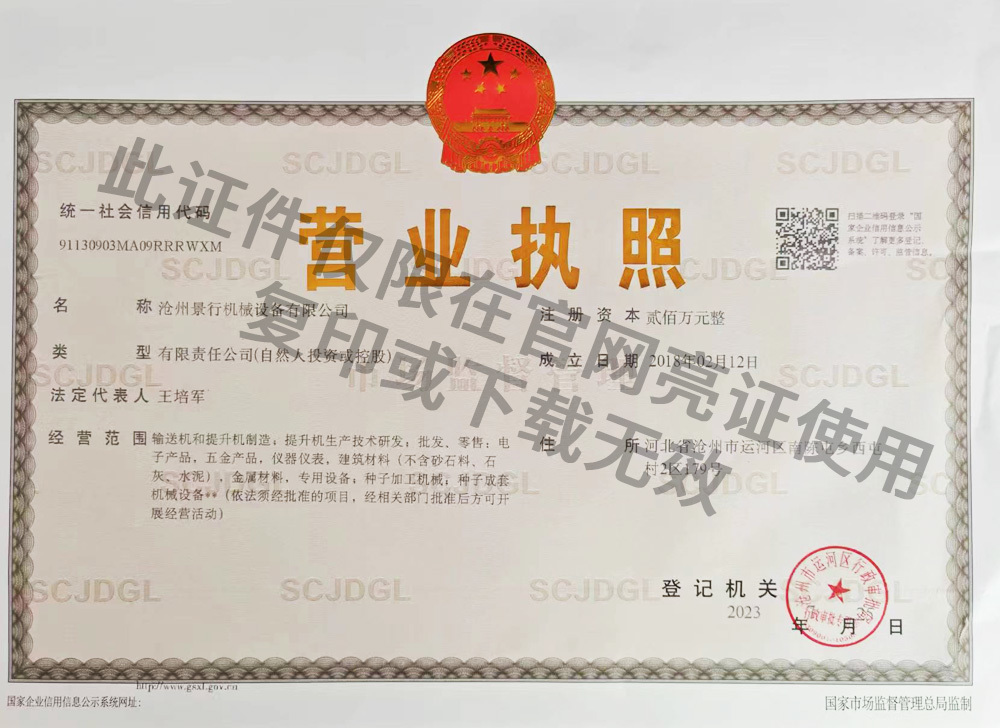
Cangzhou Jinghang Machinery Equipment Co., Ltd. | Powered by www.300.cn | SEO | Business license | Privacy Policy