Tips for Deciding Whether a Pendulum Bucket Conveyor Fits Your Process
Release time:
2026-09-23
Tips for Deciding Whether a Pendulum Bucket Conveyor Fits Your Process
Choosing the right conveying system for bulk solids isn’t a checkbox exercise — it’s an engineering decision shaped by material behavior, plant layout, and long‑term operating costs. If you’ve been comparing screw conveyors, belt elevators, and pneumatic systems, you may have come across the pendulum bucket conveyor. Many engineers dismiss it as a niche machine, but in the right process, it solves three problems at once: gentle handling, vertical lift in a small footprint, and fully enclosed, dust‑tight transport.
This article is for process engineers, plant managers, and procurement teams who need practical criteria — not sales pitches — for evaluating whether Tips for Deciding Whether a Pendulum Bucket Conveyor Fits Your Process. We’ll walk through material compatibility, throughput, layout constraints, and integration demands, drawing on industry standards and real‑world design factors. By the end, you’ll have a clear checklist to determine if a pendulum bucket conveyor belongs in your next equipment line‑up, or if another technology makes more sense.
Understanding the Pendulum Bucket Conveyor Principle
Before weighing the pros and cons, it pays to understand how these machines operate. A pendulum bucket conveyor uses a series of buckets suspended between two chains or steel cables running inside an enclosed casing. The buckets pivot freely on their hangers, so they stay upright throughout the circuit — hence “pendulum.” At the tail, the buckets scoop material from a loading chute; at the head, they discharge it by gravity as they pass over the sprocket or wheel. In many designs, you get multiple discharge points without complex diverter gates, simply by placing fixed trippers along the casing.
This swinging-bucket geometry delivers two distinct advantages. First, the conveyor can negotiate steep inclines — typically up to 90 degrees — so a single machine replaces the multi‑stage transfer system often needed with inclined belt conveyors. Second, because the buckets nest closely inside a dust‑tight housing, material losses and airborne dust are minimal compared with open belts. Typical handling capacities for industrial pendulum conveyors range from 5 m³/h for light‑duty applications to over 120 m³/h for dense, free‑flowing granules. Maximum lift heights commonly reach 40 to 60 meters per unit, depending on the chain or cable tensile strength and the number of intermediate guides.
The basic design principles are covered in ISO 5049‑1:1994, which provides calculation methods for bucket elevators and similar continuous handling equipment, addressing issues like bucket fill factor, bulk density, and power absorption. When you evaluate a vendor, this standard matters: it ensures the conveyor’s structural and drive components aren’t sized by guesswork.
Where Material Properties Become the Deal Breaker
No single conveyor handles every bulk solid equally well. The pendulum bucket type tends to excel with granular, free‑ or semi‑free‑flowing materials that might degrade in a screw conveyor or jam a pneumatic line. Common examples include plastic pellets, roasted coffee beans, spent grain, cereal flakes, compound fertilizer, and calcium carbonate granules. If your material is fragile, a Pendulum Bucket Elevator can be fitted with deep, high‑discharge buckets that avoid the tumbling and attrition typical of high‑speed belt elevators. The material stays inside the bucket until it passes the head sprocket, so impact and spilling are minimal.
That said, you need to probe a few physical properties first:
- Bulk density — The bucket’s fill factor and the required chain pitch both depend on this number. Light fluffy powders (below 300 kg/m³) may need larger buckets to meet target throughput; very dense materials (above 1,500 kg/m³) impose higher chain pull, which may limit maximum lift height.
- Particle size and shape — A typical rule from CEMA material classification is that the maximum lump size should not exceed one‑third of the bucket depth, and ideally less than 10% of the chain’s breaking load in impact force. For a standard bucket 250 mm deep, that caps particle size around 80–85 mm. Angular, sharp particles accelerate chain and sprocket wear, so you might need induction‑hardened chain pins and wear‑resistant bucket lips.
- Moisture content — Damp, sticky solids that cling to the bucket wall (e.g. wet filter cake or some clays) can cause carryover, where material rides past the discharge point and falls back into the return leg. This reduces net capacity and may lead to build‑up inside the casing. A well‑designed system often includes an adjustable wiper or scraper at the head; for borderline cases, a Material distribution machine with a timed diverter can help purge stuck material cycle after cycle.
- Temperature — Standard pendulum conveyors handle materials at ambient temperature up to about 80 °C without special components. For temperatures approaching 150 °C, you need heat‑resistant bearings and possibly an expansion joint in the steel casing. Above 150 °C, the classic pendulum design generally gives way to pan conveyors or specialised high‑temperature bucket elevators.
Get a representative sample tested. Reputable manufacturers — including those with in‑house labs — run fill/discharge trials so you see exactly how your material behaves before you commit to a purchase.
Footprint, Lift Height, and the Layout Question
Plant space often dictates which conveying solution is feasible. A pendulum bucket conveyor takes less horizontal room than an inclined belt conveyor because it moves material virtually straight up. A unit lifting 20 meters at a 50‑tonne‑per‑hour rate may occupy a ground‑level envelope of just 1.2 m × 2.5 m. By comparison, a troughed belt conveyor handling the same duty at an 18‑degree incline can stretch horizontally over 60 meters, eating up floor space that may simply not be available.
This vertical‑only character, however, can become a limitation. If you need horizontal transport before or after the lift, you will combine the pendulum elevator with a horizontal feed conveyor or screw. The joint where the two meet — the feed chute — is critical: misalignment leads to spillage. When the process demands multi‑outlet distribution above storage bins, a Material distribution machine can be mounted directly after the elevator discharge, using a traverse carriage or rotary splitter to deposit material into any of several silos. This turns a single vertical lift into a complete material handling spine.
For retrofits, measure your overhead clearance carefully. Even though the machine itself is lean, you still need room for the head platform, drive motor, and maintenance access. A typical motor and gearbox assembly adds 1.5–2.0 meters above the upper sprocket centerline. Scaffolding or permanent access platforms may be needed for periodic bucket inspection, pushing the total building height requirement higher than the nominal lift.
Energy Use and Operating Cost Realities
When making a case to management, power consumption often tips the balance. Pendulum bucket conveyors operate at low chain speeds — commonly 0.5 to 1.2 m/s — so they have low specific energy consumption compared with pneumatic systems. Industry data indicates that a well‑designed pendulum conveyor drawing 0.25 to 0.45 kWh per ton of material lifted 20 vertical meters is not unusual. A comparable dilute‑phase pneumatic line can consume over 2.0 kWh per ton for the same duty, driven by the high air flow needed. Over 6,000 operating hours a year, these differences compound quickly.
Maintenance costs are another variable. Chain, sprockets, and buckets are wearing parts. A typical chain replacement interval in a non‑abrasive duty ranges from 8,000 to 15,000 hours; in abrasive service with quartz sand, for example, it may shorten to 4,000–7,000 hours. Ask the supplier for the tensile strength of the chain and the bolt material used in the bucket attachments, and compare with your material’s Mohs hardness. You want a chain with a safety factor of at least 7:1 against breaking load for continuous service.
Dust Control and Environmental Considerations
If your process sits indoors or in a region with strict environmental rules, the enclosed nature of the pendulum conveyor helps. The casing is bolted and gasketed, and the feed and discharge chutes can be hooded. Still, displacement air leaves the casing every time buckets drop material, creating a small positive pressure that can vent dust. That’s where a Dust Collector comes into the picture. A pulse‑jet dust collector with a filtration velocity below 1.2 m/min typically captures over 99.9% of particles and keeps outlet emissions under 10 mg/Nm³ — a level that satisfies most current regulations, including those based on the US EPA National Emission Standards for Hazardous Air Pollutants (NESHAP) and the EU Industrial Emissions Directive.
Integrating a dust collector early in the design phase is cheaper than retrofitting later. Mount it on the elevator head casing or on a common platform; you can share it with the material distribution machine if the ductwork is balanced. In food or pharmaceutical applications, washdown‑grade filter media and quick‑release clamps make sanitation practical without disassembling the conveyor.
Alternatives: When to Look Elsewhere
No one conveyor fits every duty, and the pendulum type has clear limits. Below is a quick reference table for three common alternatives:
| Conveyor Type | Best For | Typical Limitation |
|---|---|---|
| Screw Conveyor | Metering, moderate incline, can handle oily or sticky material if flights modified | Not suited for high lifts (>8 m); higher power per ton than pendulum at steep angles |
| Belt Bucket Elevator | Very high capacities (200+ m³/h) with free‑flowing granules; lower capital cost per meter | Belts can slip with wet loads; high bucket speed causes more degradation |
| Pneumatic Conveyor | Long, flexible routing; total enclosure; low initial footprint | High power (2–5 kWh/t); can damage friable materials; plugging risk with moist solids |
Choose a pendulum bucket conveyor when you need gentle, vertical lift over 15 meters, with minimal degradation, low spillage, and the ability to add intermediate discharges later. If your material is extremely sticky (wet clay, some pigment press cakes), an apron or pan conveyor may perform more reliably. If you only need a 3‑meter lift, a screw feeder with a short tubular housing often costs less and is easier to clean.
Getting Support — Customization and Field Experience
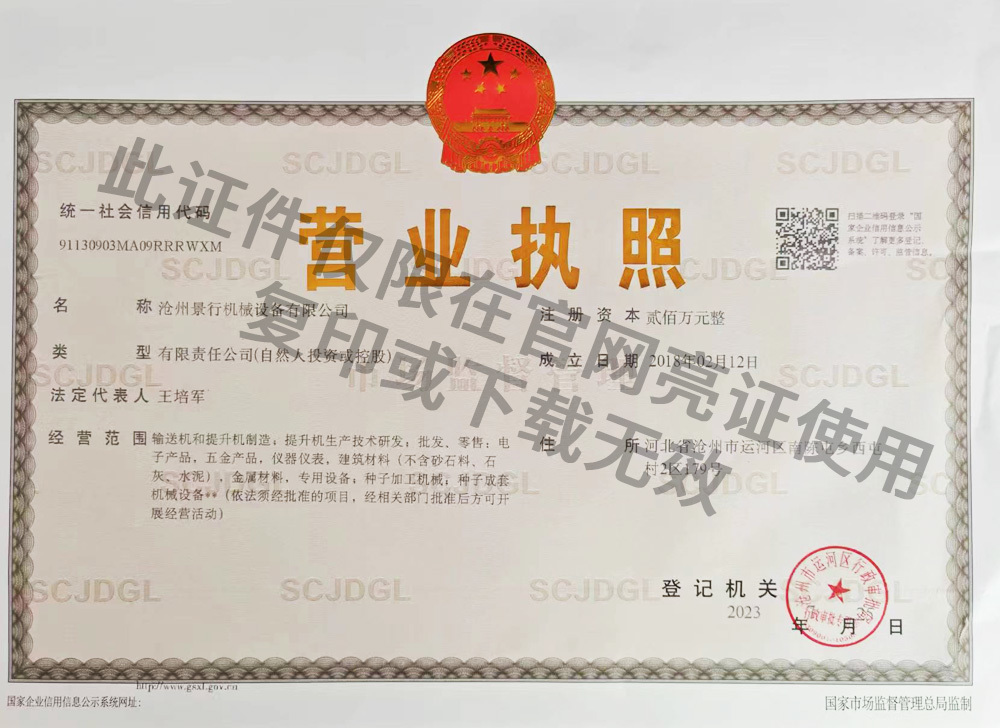
Supplier experience matters as much as the machine itself. A conveyor that works perfectly for one client’s coffee beans may fail miserably with another’s damp filter mud. Look for a supplier that offers material testing and has reference installations with materials similar to yours. Cangzhou Jinghang Machinery Equipment Co., Ltd., for example, based in Hebei Province, emphasizes support for personalized customization, adjusting bucket geometry, casing thickness, and chain material to meet specific user needs. A flexible manufacturing approach means you do not pay for features you never use, but you also avoid the risk of an off‑the‑shelf unit that barely fits your operating window.
Before signing a purchase order, walk through these practical checks:
- Request a completed technical data sheet referencing ISO 5049‑1 calculations.
- Ask for a sample bucket and chain link to inspect the material and welding quality.
- Review dust emission guarantees tied to a specific dust collector model and filter area.
- Confirm the availability of wear components; at least two spare chain assemblies should be kept on site for high‑availability operations.
Frequently Asked Questions
What is the maximum lift height for a single pendulum bucket conveyor?
Depending on the chain design and material bulk density, typical single‑unit lifts go up to 50–60 meters. For higher elevations, a cascade arrangement of two elevators may be needed; sometimes a cable‑supported design can stretch to 80 meters, but it requires careful engineering of tensile members and intermediate guides.
Can a pendulum bucket conveyor handle hot materials like calcined bauxite?
Yes, with modifications. For temperatures up to approximately 150 °C, you can specify heat‑resistant bucket plastic or cast‑iron buckets, high‑temperature grease, and a casing expansion joint. Above 150 °C, a steel pan conveyor or a specialized drag chain conveyor is usually a safer choice, as thermal expansion can seize the bucket guides.
How often do I need to replace the chains and buckets?
In clean, non‑abrasive duty, chains may last 12,000-15,000 operating hours. Abrasive materials like silica sand can reduce this to 4,000–7,000 hours. Buckets themselves tend to last longer unless they strike a foreign object. Condition‑based maintenance — checking chain elongation quarterly — helps you schedule replacement during planned shutdowns.
Is it possible to add a material distribution machine after the elevator is already installed?
Yes, as long as you provide an adapter chute and adequate headroom. A Material distribution machine can be bolted onto the existing discharge flange; you’ll need to verify the elevator’s capacity matches the distributor’s throughput and adjust the controls for sequencing.
What dust emission levels can I expect with integrated dust collection?
A properly sized Dust Collector with pulse‑jet cleaning can hold emissions to 5‑10 mg/Nm³, well within most regulatory limits. For ultra‑low requirements (<5 mg/Nm³), a cartridge filter with a surface‑loading design and a secondary HEPA stage may be specified.
Moving Forward with Your Evaluation
Deciding whether a pendulum bucket conveyor fits your process — that is, whether it truly delivers value and not just becomes another maintenance headache — boils down to a handful of measurable factors. Particle size, bulk density, lift height, headroom, and required throughput directly determine if the swinging‑bucket geometry will outperform a screw, belt, or pneumatic line. When the numbers line up, the payoff comes in lower energy bills, less product damage, and a dust‑free plant floor.
Your next step should be a material test run. Share a 50‑kg sample with an experienced conveyor manufacturer. Watch the fill factor, measure carryover, and probe the chain tension under load. Only then can you confidently lock in the bucket style, chain pitch, motor size, and auxiliary equipment like a Pendulum Bucket Elevator discharge hood paired with a material distribution machine and dust collector. Rely on the data — and on suppliers who are transparent about their design standards — to turn a promising concept into reliable, repeatable conveying.
Related News
Contact Us
Cangzhou Jinghang Machinery Equipment Co., Ltd.
Add:Xitun East Road, Nanchentun Town, Yunhe District, Cangzhou City, Hebei Province, China
Contact:Manager Wang
WhatsApp:lyh520wpj
Facebook:lyh520wpj@gmail.com
Mobile:+86-18713706961
E-mail:info@jinghangelevator.com
Focus on us

Consultation
We will contact you within one working day. Please pay attention to your email.
Cangzhou Jinghang Machinery Equipment Co., Ltd. | Powered by www.300.cn | SEO | Business license | Privacy Policy